
‘When Orchards Begin to Weep’: Sudden Fruit Fall Alarms Kashmir’s Apple Growers
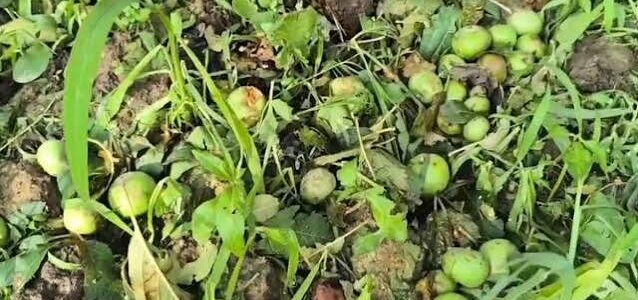
Erratic weather, prolonged heat and moisture stress blamed for premature dropping of apples, pears and stone fruits across Valley orchards
Growers fear heavy economic losses as horticulture experts urge scientific intervention to save the remaining crop
Our Special Correspondent
Srinagar: Across Kashmir’s lush orchards, where branches are usually weighed down by the promise of a rich harvest, an unsettling sight is worrying fruit growers this season — thousands of young apples and other fruits carpeting the ground weeks before maturity.
From Shopian and Pulwama in south Kashmir to Sopore and Baramulla in the north, orchardists say an unusual and sudden fruit fall has gripped the Valley this year, triggering anxiety among growers who depend entirely on horticulture for their livelihood.
Under the shade of apple trees in the orchards of south Kashmir, farmers walk silently through rows of fallen fruit, lifting tiny green apples from the ground with visible concern. Many say they have not witnessed such extensive premature fruit dropping in recent years.
“We were expecting a healthy crop this season after a good flowering phase, but suddenly the fruits started falling in large numbers,” said an orchardist from Shopian. “Every morning the ground is covered with fresh fruit.”
Growers and horticulture experts attribute the phenomenon to a combination of erratic weather patterns, prolonged dry spells, sudden temperature fluctuations and moisture stress that have affected fruit-bearing trees across the Valley.
This year, Kashmir witnessed unusual weather conditions, including warmer-than-normal days, scattered rainfall and prolonged periods of humidity, which experts say disrupted the natural fruit retention process in orchards.
The problem is not confined to apple orchards alone. Pears, plums, peaches and other stone fruits have also shown signs of stress in several districts, raising fears of a wider horticultural impact.
“Horticulture is the backbone of Kashmir’s rural economy. Even a minor decline in production directly affects thousands of families,” said a horticulture expert, adding that premature fruit fall can significantly reduce overall yield and fruit quality if not controlled in time.
Experts say trees often shed a limited number of fruits naturally during the season, a process known as physiological fruit drop. However, the scale of fruit fall being witnessed this year appears far beyond normal levels in many areas.
Several growers believe moisture deficiency caused by inadequate rainfall has weakened the trees, while others blame sudden heat stress during critical fruit-development stages. Pest attacks and nutrient imbalance are also being cited as contributing factors in some orchards.
In many villages, orchardists have now intensified irrigation and nutrient sprays in an attempt to save the remaining crop. Horticulture officials have advised farmers to follow scientific orchard management practices, including proper irrigation scheduling, calcium and micronutrient application, and timely disease control measures.
For Kashmir, where horticulture contributes significantly to the economy and provides employment to lakhs of people, the falling fruit has become more than a farming concern — it is an emotional and economic distress unfolding quietly beneath the Valley’s green canopy.
As growers look anxiously toward the skies for stable weather and timely rainfall, the orchards of Kashmir stand caught between hope and uncertainty, waiting for the season to decide whether the harvest can still be saved.
