
Claws at the Orchard Edge: Kashmir’s Escalating Black Bear Conflict Leaves Villages Living in Fear
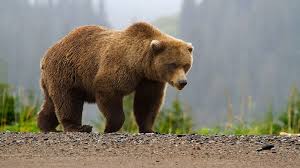
More than 2,350 bear attacks and over 110 deaths recorded in Kashmir between 2000 and 2020 as human-wildlife encounters surge across forest fringes
Srinagar: For generations, forests and villages in Kashmir existed in a delicate balance, separated by dense tree lines, mountain streams and seasonal rhythms. But today, that fragile boundary is disappearing rapidly, bringing humans and wildlife into increasingly dangerous proximity.
Across the Valley, the Asiatic black bear — once rarely seen near habitations — is now emerging regularly in orchards, maize fields and even residential areas, leaving behind a trail of injuries, panic and economic distress.
From Kupwara’s forested villages to the orchard belts of Shopian, Baramulla and Anantnag, residents say bear sightings have become alarmingly frequent, particularly during harvesting months.
“Earlier, bears stayed deep inside forests. Now they appear inside orchards and villages almost every week,” said Bashir Ahmad, an orchard worker from Tangmarg who survived a bear attack last year. “People are afraid to go alone into fields, especially during dawn and evening.”
Experts say the crisis reflects a deeper ecological imbalance unfolding in Kashmir’s fragile Himalayan landscape.
A comprehensive scientific study published in the Journal of Threatened Taxa documented 2,357 black bear attacks in Kashmir between 2000 and 2020, resulting in 114 deaths and more than 2,200 injuries. Researchers found that most attacks occurred between July and November, coinciding with the fruit harvesting season when human activity peaks near forest fringes.
Wildlife experts say the rapid expansion of apple orchards closer to forest areas has significantly intensified the conflict.
“Kashmir’s horticulture boom has changed land-use patterns dramatically,” said noted wildlife conservationist Aaliya Mir. “Orchards provide attractive food sources for bears, especially during autumn. As natural habitats shrink and food availability inside forests declines, bears increasingly move towards human settlements.”
She said many encounters occur accidentally when people working in orchards suddenly come face-to-face with bears.
“Most attacks are defensive reactions. Bears feel threatened when surprised at close range,” she added.
Climate change is also emerging as a major factor behind changing wildlife behaviour.
Officials from the Wildlife Protection Department say warmer winters and erratic snowfall may be disrupting traditional hibernation patterns, keeping bears active for longer periods.
“Historically, harsh winters restricted bear movement. But changing weather conditions are altering behavioural cycles,” said a senior wildlife official. “We are now observing prolonged activity periods in several districts.”
Poor waste disposal practices near habitations and tourist destinations are further drawing bears closer to populated areas. Open garbage dumps containing food waste have become easy feeding grounds for wildlife.
Doctors in Kashmir hospitals say bear attacks often cause devastating facial injuries and long-term trauma. Medical professionals dealing with such cases say survivors frequently require multiple surgeries and psychological counselling.
“Many victims suffer permanent disfigurement and emotional trauma,” said a Srinagar-based trauma surgeon. “Some are unable to return to farming or orchard work for months.”
Officials say several measures are being implemented to reduce conflict, including rapid response teams, trap cages, awareness drives, control rooms and compensation mechanisms for victims.
“We are conducting awareness programmes in vulnerable villages and advising people to avoid venturing alone into orchards during high-risk hours,” a wildlife department official said.
Yet in many villages along Kashmir’s forest belt, fear has become part of daily life.
As forests continue to shrink under developmental pressure and human activity expands deeper into wildlife territory, conservationists warn that the Valley’s growing black bear conflict may intensify further unless ecological balance is restored.
For now, in the orchards that once symbolised Kashmir’s prosperity, silence often carries a new warning — the possibility of an encounter lurking just beyond the trees.
