
Year-Round Tulips : SKUAST K’s Floral Breakthrough Set to Redefine Kashmir Tourism
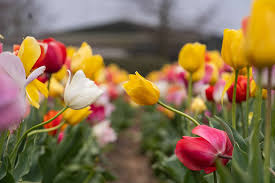
Scientists develop staggered blooming technique to ensure tulips across seasons, boosting tourism and floriculture economy
Our Special Correspondent
Srinagar: In a major breakthrough that could transform Kashmir’s famed tulip industry and extend the Valley’s floral tourism far beyond spring, scientists at Sher-e-Kashmir University of Agricultural Sciences and Technology of Kashmir (SKUAST-K) have developed a scientific mechanism aimed at ensuring the availability of tulips throughout the year.
The innovation, achieved through advanced bulb preservation, climate-controlled cultivation and staggered blooming techniques, is being seen as a landmark step for Kashmir’s floriculture sector, which has long depended on a short spring flowering window.
Officials associated with the project said the research has opened the possibility of maintaining tulip blooms in different phases across seasons, potentially allowing gardens, hotels and commercial growers to showcase tulips beyond the traditional April bloom.
“This is a significant milestone for Kashmir’s floriculture landscape. Our scientists have worked extensively on post-harvest bulb management, controlled environmental conditions and flowering regulation to make year-round tulip cultivation possible,” a senior SKUAST official said.
The development is expected to give a major boost to Kashmir’s tourism industry, particularly the iconic tulip tourism circuit that attracts lakhs of visitors annually to the Valley during spring.
Vice Chancellor of SKUAST-K, Prof Nazir Ahmad Ganai, said the breakthrough reflects the university’s commitment to blending science with economic opportunity.
“Kashmir is globally recognised for its tulips, but the blooming season has traditionally remained limited. Through scientific intervention and innovation, our researchers are now exploring ways to extend this floral experience throughout the year. This can create new livelihood opportunities for farmers, entrepreneurs and the tourism sector,” Prof Ganai said.
He said the university is focusing on translating laboratory research into field-level benefits for growers and commercial floriculture units.
“Our aim is not merely scientific success but economic transformation. Floriculture has immense potential in Jammu and Kashmir, and such innovations can help position the region as an international floral destination,” he added.
Experts believe the achievement could help local growers diversify income streams while also strengthening Kashmir’s identity as a global flower tourism hub.
Scientists involved in the research said the next phase would involve large-scale demonstrations, farmer outreach programmes and collaborations with tourism stakeholders.
With tulips already serving as one of Kashmir’s strongest visual symbols every spring, the possibility of witnessing the iconic blooms across multiple seasons may soon become a reality—adding another vibrant chapter to the Valley’s growing floriculture success story.
