
Kashmir’s Eid Livestock Trade Crosses Rs 384 Crore Despite Sales Slump
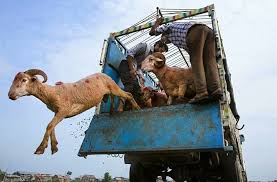
Nearly 1.92 lakh sheep brought to Valley in 1,200 trucks; dealers cite rising costs, cautious spending and changing buying trends
Srinagar: Kashmir’s Eid-ul-Adha livestock trade generated an estimated business of Rs 384 crore, with nearly 1.92 lakh sheep and goats arriving in the Valley in around 1,200 trucks during the fortnight preceding the festival, according to the Kashmir Mutton Dealers Association.
The annual livestock trade, considered one of the Valley’s largest seasonal economic activities, witnessed the arrival of animals from Rajasthan, Punjab, Haryana and other states, supplying markets across Kashmir ahead of the festival. Temporary livestock markets and sale points were set up at several locations, drawing large crowds of buyers in the days leading up to Eid-ul-Adha.
Association president Mehrajudin Bhat said the trade generated substantial business despite a decline in sales compared to previous years.
“Nearly 1.92 lakh sheep and goats were brought to Kashmir ahead of Eid-ul-Adha, generating business worth around Rs 384 crore. However, sales witnessed a decline compared to previous years,” Bhat said.
He said the livestock trade continues to support thousands of families associated directly and indirectly with the sector, including dealers, transporters, labourers, fodder suppliers and market workers.
Livestock markets across Srinagar and other districts witnessed brisk activity before the festival, with thousands of buyers visiting makeshift animal markets. However, traders said changing consumer behaviour and economic pressures affected demand this year.
“There was good footfall in the markets, especially during the last few days before Eid, but buyers were spending cautiously and bargaining heavily,” said Ghulam Mohammad, a livestock dealer at Srinagar’s Eidgah market.
Another trader, Abdul Rashid, said transportation and upkeep costs had risen significantly, impacting profits.
“Expenses have gone up, while customers are looking for affordable options. Profit margins were lower despite the large volume of trade. Feed and transportation costs have increased considerably over the years,” he said.
Mohammad Shafi, a dealer from Budgam, said more families opted to jointly purchase sacrificial animals to reduce expenses.
“Many customers preferred sharing animals with relatives or neighbours instead of purchasing individually. That trend has had an impact on overall sales,” he said.
Traders also noted that many buyers delayed purchases until the final days before Eid in anticipation of lower prices, resulting in a rush at markets shortly before the festival. While demand picked up towards the end, dealers said it did not match the levels witnessed in previous years.
Despite the slowdown, the Eid livestock trade continued to provide a significant boost to the Valley’s economy. Apart from generating an estimated turnover of Rs 384 crore, the sector created seasonal employment opportunities for hundreds of people involved in transportation, animal care, loading, unloading and retail sales.
The trade remains a key component of Kashmir’s Eid economy, reflecting both the cultural significance of the festival and the extensive network livelihoods that depend on it each year.
