
Dal’s Floating Palaces Are Slowly Sinking into History
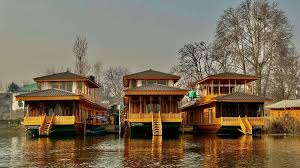
Frequent sinking of Kashmir’s iconic houseboats raises alarm over the survival of a centuries-old heritage woven into the Valley’s tourism, culture and identity
Stakeholders say ageing structures, mounting repair costs and lack of sustained restoration support are steadily pushing the famed houseboat culture toward decline
Srinagar: Beneath the postcard beauty of Dal Lake, a silent crisis is unfolding. Kashmir’s iconic houseboats — once seen as symbols of royal hospitality, timeless craftsmanship and the Valley’s tourism identity — are slowly disappearing from the waters they have adorned for generations. Repeated sinking incidents over the past few years have triggered fresh concern among stakeholders, who fear that the famed floating heritage may gradually fade into history if urgent restoration measures are not taken.
For decades, the intricately carved cedarwood houseboats resting on Dal and Nigeen lakes have attracted tourists from across the globe, offering a uniquely Kashmiri experience of life on water. But behind the charm lies a struggling sector battling ageing infrastructure, financial distress, environmental pressures and shrinking numbers.
Owners say many houseboats are now over a century old and require extensive repairs beneath the waterline — work that is both technically difficult and financially exhausting. Several structures, weakened by time and weather, have either partially submerged or sunk completely in recent years, sending shockwaves through the tourism community.
Chairman of the Houseboat Owners Association, Manzoor Pakhtoon, described the situation as deeply worrying and said the Valley risks losing an irreplaceable part of its cultural identity.
“Houseboats are not simply tourist accommodations. They represent Kashmir’s heritage, craftsmanship and history. Every sinking incident feels like losing a piece of our collective legacy,” Pakhtoon said.
He warned that the declining number of houseboats should be treated as a serious cultural and economic concern rather than an isolated tourism issue.
“If timely restoration and preservation measures are not introduced, future generations may only know these houseboats through old photographs and travel books,” he added.
Stakeholders allege that strict regulations on repairs, absence of adequate financial assistance and rising costs of timber and maintenance have made survival increasingly difficult for traditional owners. Many families dependent on the sector say they are struggling to maintain structures that require constant upkeep in changing environmental conditions.
Tourism players believe the decline of houseboats could also weaken Kashmir’s international tourism image, as the floating wooden marvels have for decades remained among the Valley’s most recognisable attractions.
Experts say preserving houseboats requires a balanced approach that safeguards both the fragile lake ecosystem and the centuries-old livelihood attached to the floating structures. Without sustained conservation efforts, they warn, Kashmir could lose one of its most enduring and globally recognised cultural symbols.
