
Where Springs Turn Into Celebration
Panzath’s Centuries-Old Fish Festival Keeps Kashmir’s Ecological Heritage Alive
Hundreds join unique annual tradition in South Kashmir’s Qazigund as villagers clean springs, catch fish and preserve a legacy rooted in nature and community spirit
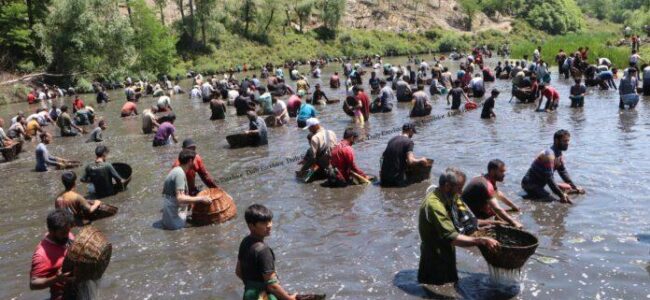
Qazigund: Amid chants, laughter and splashes of crystal-clear water, the scenic village of Panzath in South Kashmir’s Qazigund area came alive on Sunday as hundreds of residents participated in the region’s centuries-old annual fish festival — a rare cultural tradition that beautifully blends festivity, environmental conservation and community bonding.
Held at the famed Panzath Nag, a cluster of nearly 500 freshwater springs nestled at the foothills of the Pir Panjal mountains, the festival attracts villagers from Panzath and adjoining areas every year during spring. Carrying wicker baskets, traditional nets and wooden tools, people of all ages stepped into the shallow waters to clean the springs and catch fish — an activity permitted only once annually under local custom.
The tradition, locals say, dates back several generations and was started by ancestors to ensure the natural springs remain clean and free-flowing throughout the year. The springs are considered the lifeline of the area, supplying drinking water and irrigation to dozens of villages in South Kashmir.
The word “Panzath” is believed to have originated from Paanch Hath, meaning “five hundred,” referring to the hundreds of natural springs spread across the village landscape.
As dawn broke over the lush green meadows, elderly men, women and youth gathered around the water bodies amid scenes reminiscent of old Kashmiri village life. Many families treated the occasion like a community picnic while children enthusiastically chased fish through the flowing streams.
“This is much more than a festival for us. It is part of our identity and heritage,” said 75-year-old Ghulam Mohammad Rather, an elderly resident of the village. “Our ancestors taught us that protecting water sources is a sacred responsibility. Since my childhood, I have seen people coming together every year to clean these springs.”
Another elder, Abdul Rashid Dar, said the tradition reflects Kashmir’s age-old relationship with nature. “People today speak of environmental conservation in seminars and conferences, but our forefathers practiced it practically hundreds of years ago,” he said. “This festival teaches younger generations the importance of preserving water bodies.”
Locals said the annual event also coincides with traditional springtime gatherings and prayers, making it both a cultural and spiritual occasion for many families.
Imran Ahmad, a local youth participating in the festival, said the event strengthens social bonds in the village. “People forget their differences and work together here. Youngsters eagerly wait for this day every year,” he said. “It is one of the few traditions that still connects us deeply with our roots.”
Women participants too described the festival as a celebration of collective heritage. “Earlier, entire villages would participate and traditional Kashmiri food would be prepared near the springs,” said Raja Begum, a local resident. “Even today the atmosphere feels festive and nostalgic.”
However, residents expressed concern over declining water levels, pollution and growing human interference around the springs. Many said climate change and unchecked construction activities are threatening the fragile ecosystem of Panzath Nag.
“We fear these springs may shrink in the coming years if proper conservation measures are not taken,” said a local school teacher. “The government should declare this area an ecological heritage site and promote eco-tourism while preserving its originality.”
Known for its pristine waters and breathtaking surroundings, Panzath has increasingly emerged as a tourist attraction in South Kashmir. Locals believe the unique fish festival has the potential to draw visitors from across the country if promoted properly.
For the people of Panzath, however, the festival remains far more than a tourist spectacle — it is a living reminder of Kashmir’s traditional wisdom where culture, community and conservation flow together like the springs that have sustained generations.
