
Rivers of Hope: J&K’s Hydel Revival Powers New Energy Dream
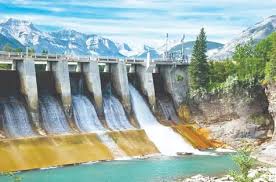
Mega projects, revived heritage plants and fresh investments signal a turning point for the Union Territory’s power sector
Srinagar: Jammu & Kashmir’s vast rivers, long seen as an underutilised natural asset, are once again taking centre stage as the Union Territory pushes ahead with an ambitious hydropower expansion aimed at transforming its energy landscape.
From mega hydroelectric projects to the revival of century-old power infrastructure, the government’s renewed focus on hydel energy is beginning to reshape the region’s power sector and fuel hopes of greater energy self-reliance.
Officials said work on several key projects has gained momentum in recent months, with authorities fast-tracking approvals, investments and execution to tap the Union Territory’s enormous hydroelectric potential.
J&K possesses an estimated hydropower potential of nearly 18,000 MW, yet less than one-fourth of it has been harnessed so far, according to official figures. Energy experts say the region’s rivers could become the backbone of a clean-energy economy if projects are completed on time.
In a major boost, NHPC recently approved investments worth more than Rs 5,700 crore for the 240-MW Uri-I Stage-II and 260-MW Dulhasti Stage-II hydroelectric projects, both expected to significantly enhance local power generation capacity.
The renewed urgency in the power sector has also come amid changing geopolitical and economic considerations, with authorities accelerating work on long-pending hydel projects across Jammu & Kashmir.
Adding a symbolic touch to the revival drive, the administration recently announced the restoration of the historic Mohra Power Project in Baramulla — a 120-year-old hydroelectric facility that once powered large parts of Kashmir during the Maharaja’s era before falling into disrepair decades ago.
Officials say reforms in transmission infrastructure, smart metering and distribution systems are also improving electricity supply and revenue collection across the Union Territory.
While challenges such as climate change, fluctuating river flows and seasonal deficits continue to impact hydel generation, policymakers believe the renewed investments could help position Jammu & Kashmir as a major renewable energy hub in the coming years.
For a region that has long battled power shortages despite its mighty rivers, the new hydel push is being seen not merely as an infrastructure upgrade, but as the beginning of a larger economic and developmental transformation.
