
As Dal’s Houseboats Age, The Hands That Built Them Are Disappearing
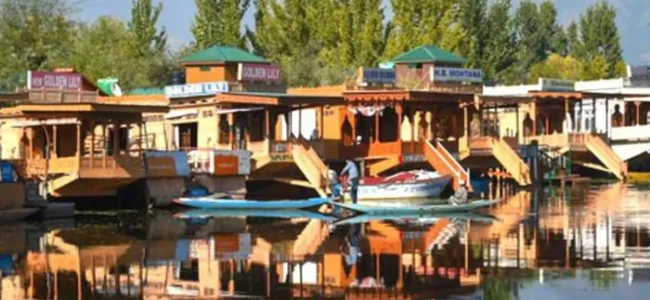
Lone craftsman Nazir Ahmad Kawdari says centuries-old houseboat making art faces extinction amid official neglect and fading interest among youth
Srinagar: On the quiet banks of the Dal Lake, where Kashmir’s iconic houseboats have floated gracefully for generations, the rhythmic sound of hammer striking wood is slowly fading into silence.
Inside a modest workshop lined with planks of deodar wood, 68-year-old Nazir Ahmad Kawdari continues to carve, shape and polish what he calls “the soul of Kashmir tourism.” But the veteran craftsman fears he may be among the last surviving traditional houseboat makers in the Valley.
“With me, this art may disappear,” Nazir says softly, running his hand over an intricately carved wooden panel meant for a houseboat deck. “The younger generation does not want to continue this work anymore.”
For decades, Kashmir’s majestic houseboats have been symbols of the Valley’s cultural identity and tourism industry, attracting visitors from across the globe. Built entirely from wood with elaborate craftsmanship and intricate walnut-style carvings, the floating homes once represented prestige, livelihood and heritage all at once.
But today, the traditional art of constructing these houseboats is staring at extinction.
Nazir Ahmad, who inherited the craft from his father and grandfather, says the profession no longer offers financial security or dignity to artisans.
“Earlier, building a houseboat was considered an honour. Skilled craftsmen were respected and work continued throughout the year. Today there is hardly any support, no financial assistance and no new generation willing to learn,” he says.
According to him, the decline accelerated over the years due to repeated tourism setbacks, environmental regulations, rising costs of raw material and lack of institutional backing for traditional artisans.
“People only talk about saving houseboats, but nobody talks about saving the craftsmen who actually build them,” he remarks.
The veteran artisan says constructing a single traditional houseboat takes months of painstaking labour, precision and teamwork. From preparing the massive deodar base to designing ornate interiors and hand-carved balconies, every step demands years of experience.
“It is not carpentry alone; it is an art passed from one generation to another,” Nazir says.
However, he laments that younger people now prefer government jobs or easier occupations over physically demanding craftsmanship that offers uncertain returns.
“My own children are educated. They respect this work, but they do not want to continue it because they have seen the struggles attached to it,” he says with visible disappointment.
Local residents and houseboat owners also fear that the decline of traditional builders could eventually affect the very identity of Kashmir’s famed water tourism.
Ghulam Mohammad, a houseboat owner on Dal Lake, says repairs and maintenance have become increasingly difficult due to shortage of skilled craftsmen.
“There was a time when entire localities specialised in houseboat construction. Today only a handful of elderly artisans remain,” he says.
Experts believe that unless urgent preservation measures are introduced, Kashmir may lose not just a profession but an irreplaceable cultural legacy.
They say there is a need for special training centres, financial incentives and recognition for traditional artisans associated with the centuries-old craft.
Nazir Ahmad, meanwhile, continues his work quietly beside the lake, shaping wood with the same patience his ancestors once did.
But every passing year deepens his fear that the sound of chisels echoing across Dal Lake may one day disappear forever, leaving behind only memories of a craft that once floated proudly on Kashmir’s waters.
