
Smart Bunkers Still Elude LoC Villages a Year After Shelling
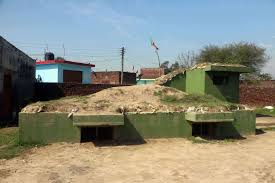
Residents of Uri, Karnah say promised safety infrastructure remains incomplete as Centre reiterates commitment
Our Special Correspondent
Srinagar: One year after intense cross-border shelling battered villages along the Line of Control (LoC), the rollout of “smart bunkers” meant to safeguard civilians continues to lag, with residents in frontier areas still waiting for the promised protection.
In Uri and Karnah—among the worst-affected sectors—families say the absence of completed bunkers has left a critical gap in preparedness, even as official assurances continue.
“We were told that modern bunkers would be built soon after the shelling last year, but nothing substantial has come up in our area,” said Mohammad Yousuf, a resident of Uri. “These bunkers are essential for our safety. Without them, we remain exposed.”
Echoing similar concerns, residents in Karnah said the implementation has been uneven. “Some locations may have seen progress, but many villages like ours are still waiting,” said Haleema Begum from Karnah. “A smart bunker is not just a facility—it is a necessity for people living along the LoC.”
The Union government had announced an ambitious plan to construct reinforced “smart bunkers” equipped with better protection, ventilation, and capacity, aimed at reducing civilian vulnerability during shelling. Union Home Minister Amit Shah has repeatedly stressed that the safety of border residents is a priority, assuring that bunker construction is being taken up in a phased manner.
“Ensuring the safety of people living in border areas is our top priority. Work on modern bunkers is underway and will be expedited,” Shah had said during a recent review of security and development measures in Jammu and Kashmir.
Officials on the ground maintain that the process is progressing despite challenges. “There were delays due to terrain, weather, and procedural requirements, but construction has now picked up pace,” said a senior official in the Baramulla district administration. “Several bunkers have been completed, and more are in different stages of execution.”
However, residents insist that the pace does not reflect the urgency of their situation. “Announcements have been made, but the work on the ground needs to be faster,” said another Uri resident. “Until bunkers are available in every vulnerable village, the risk remains.”
As the government pushes forward with its plans, the gap between commitment and completion continues to shape life in LoC villages—where, a year on, the promise of smart bunkers remains a work in progress.
