
Baisran attack anniversary
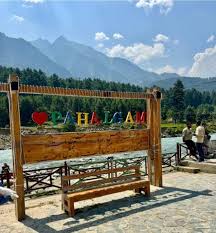
Resilience outpaces last year’s grief as Pahalgam reports heavy tourist bookings
Our Special Correspondent
Srinagar: A year after the tranquil meadows of Baisran were torn apart by gunfire, this famed resort town is witnessing a powerful, almost symbolic return. The same slopes that once echoed with panic are today alive with the hum of tourists, camera clicks, and the steady rhythm of a place reclaiming itself.
On April 21 last year, 26 people—mostly tourists—and a local pony operator were killed, while 20 others were injured in one of the deadliest attacks to hit the region. The tragedy had cast a long shadow over Kashmir’s tourism sector, triggering cancellations and a wave of uncertainty.
But twelve months on, Pahalgam is telling a different story.
Hotels, guesthouses and homestays are reporting heavy bookings, with occupancy levels touching 85 to 95 percent. Many properties were booked weeks in advance, an indicator that confidence among travellers is steadily returning.
“We are nearly sold out,” said a hotelier in the main market. “What stands out this year is that people are planning their trips in advance. That wasn’t the case immediately after the attack. It shows that tourists are coming back with trust.”
The surge, however, is unfolding under a tight and visibly strengthened security apparatus. Authorities have put in place a multi-layered security grid across Pahalgam and its surrounding tourist circuits. Checkpoints have been established on key approach roads, vehicles are being screened, and additional deployments of police and paramilitary forces are in place, particularly around Baisran and other high-footfall areas.
Drone surveillance, intensified patrolling and quick response teams are now part of the landscape. Officials say the measures are designed to reassure visitors while ensuring preparedness.
“We have enhanced coordination and vigilance without disrupting the tourist experience,” a senior official said. “The focus is on safety with sensitivity.”
Tourists say the visible security has added to their sense of comfort. “We could see the checks on the way, but it actually made us feel safer,” said Neha Sharma, a visitor from Delhi. “Once you are here, the atmosphere is peaceful. It doesn’t feel tense at all.”
For many, the visit carries a deeper meaning.
“We knew about what happened last year, and it was heartbreaking,” said Rohan Mehta, a tourist from Mumbai. “But we didn’t want fear to decide our plans. Kashmir is too beautiful, and its people deserve support. Being here feels like a statement—that life must go on.”
On the ground, the revival is breathing life back into livelihoods that had taken a hit after the attack. Taxi drivers, pony operators, guides and small shopkeepers are once again seeing steady business.
“This season has brought hope back,” said Umar Dar, a tourist cab driver. “We have continuous bookings now. Phones keep ringing. Last year, there was silence everywhere. This year, there is movement again.”
For pony operators like Bashir Ahmad, the change is deeply emotional. “Last year, we were helping carry the injured from these hills,” he recalled. “Today, we are guiding tourists again. The pain is still there, but work has returned—and that gives us strength.”
The administration has also stepped up infrastructure and emergency preparedness in the region. Local health facilities have been reinforced, and additional ambulances have been arranged to ensure swift response if needed, officials said.
Even as the anniversary revives painful memories, there is a quiet determination among locals not to let tragedy define the future of Pahalgam.
As the sun sets over the Lidder Valley and tourists continue to stroll through Baisran’s green expanse, the message is unmistakable: the scars remain, but so does the spirit to move forward.
