
Kashmir Sits on Shaky Ground as Region Falls in Highest Seismic Risk Zone
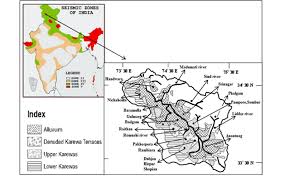
Experts warn fragile geology and unsafe construction could turn a major quake into a large-scale disaster in the Valley
Our Special Correspondent
Srinagar: Kashmir’s scenic beauty masks a harsh geological truth—the region lies in one of the most earthquake-prone belts in the world. Long classified under Seismic Zone V, the highest risk category in India’s earlier seismic map, the entire Himalayan region, including Jammu and Kashmir, is now widely assessed by experts as falling in an even more severe high-risk bracket, reflecting its extreme vulnerability.
The Valley sits along the collision zone of the Indian and Eurasian tectonic plates, where continuous underground stress frequently triggers tremors. While most earthquakes recorded in the region are mild, their regular occurrence points to persistent tectonic activity beneath the surface.
Seismologists say the real danger lies not just in the earthquakes, but in the region’s preparedness.
“Earthquakes can occur anytime; the focus must be on earthquake-resistant construction,” said Prof. Ghulam Jeelani, a noted geologist.
Echoing this concern, scientist Imtiyaz Parvez remarked, “Earthquakes don’t kill people, buildings do,” underlining the risks posed by weak infrastructure.
Adding to the concern is Kashmir’s unique soil structure. Large parts of the Valley are covered with soft sediments that can amplify seismic waves, increasing the intensity of shaking and potential damage during an earthquake.
Over the past decade, Jammu and Kashmir has witnessed hundreds of tremors, averaging several dozen each year. Though most go unnoticed, experts caution that the region remains overdue for a major seismic event.
Rapid urbanisation, unregulated construction, and lack of adherence to building codes have further heightened the risk. Many structures, particularly in densely populated areas, are not designed to withstand strong earthquakes.
Experts stress that while earthquakes cannot be predicted, their impact can be significantly reduced through better planning, strict implementation of building norms, and public awareness.
For Kashmir, the warning signs are clear. The question is no longer whether an earthquake will strike—but whether the region is prepared when it does.
