
Sawalkote Hydropower Project: Ramban to Bear Brunt as Govt Defends Access Plan
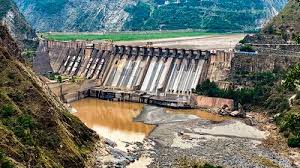
Udhampur hosts key infrastructure but gets limited submergence share; alternate road proposal deemed unviable
Our Special Correspondent
Srinagar: The Government of Jammu and Kashmir has offered a detailed clarification on the distribution of impact, infrastructure and connectivity related to the ambitious 1,856 MW Sawalkote Hydroelectric Project, stating that while the project is spread across three districts, Ramban will bear the overwhelming burden of land submergence.
Replying to question in the assembly by MLA Pawan Kumar Gupta, the Power Development Department informed the House that the project components are strategically distributed across Ramban, Udhampur and Reasi districts, with each playing a distinct role in the overall execution.
According to the official reply, critical infrastructure—including the powerhouse, main tunnels and left abutment of the dam—is located in Udhampur district, making it a principal host for core construction activities. Meanwhile, the diversion tunnel, right abutment of the dam and right bank tunnels fall within Reasi district.
However, it is Ramban district that emerges as the most impacted in terms of land acquisition and submergence. Of the total 1,401.35 hectares of land required for the project, Ramban alone accounts for 1,097.55 hectares, compared to 197 hectares in Udhampur and 106.8 hectares in Reasi.
The disparity becomes even more pronounced in terms of submergence. Out of the total 1,158.75 hectares of land expected to go under water, as much as 1,030.55 hectares falls in Ramban, while Udhampur and Reasi account for just 63 hectares and 65.2 hectares respectively.
Addressing concerns raised about Udhampur’s share in project impact and its lack of direct, all-weather connectivity to key project sites, the government acknowledged that only around 14 percent of the total land requirement and a relatively small portion of submergence fall within the district.
On the demand for developing an alternative access road—particularly the MH Morh to Chakka stretch—the government said the proposal had been examined but found unsuitable for the project’s logistical requirements. It noted that the existing alignment is a narrow, single-lane road with high maintenance demands and is incapable of supporting the movement of heavy machinery and equipment essential for large-scale hydropower construction.
“The Detailed Project Report (DPR) has been prepared based on technically feasible and commercially viable parameters and has been duly approved by the Central Electricity Authority under the Ministry of Power, Government of India,” the reply stated.
It further emphasised that the selection of access routes is guided by a combination of engineering feasibility, cost efficiency, terrain conditions and operational logistics. Any deviation from the approved plan, the government said, would require a fresh technical and economic evaluation.
The response comes amid growing concerns from local stakeholders and representatives over equitable infrastructure development and access to economic opportunities arising from the project. Residents in parts of Udhampur have argued that despite hosting critical infrastructure components, the absence of robust connectivity could limit their participation in employment and ancillary benefits linked to the project.
The Sawalkote Hydroelectric Project, one of the largest planned hydropower ventures in Jammu and Kashmir, is expected to play a key role in boosting power generation capacity in the region. However, questions around regional equity, infrastructure access and distribution of impact continue to shape the discourse around its implementation.
