
Kashmir’s Vanishing Waters Get Lifeline
Rs 155 Cr Plan to Revive 1,810 Wetlands
GIS mapping, Ramsar push & Wular restoration headline a sweeping mission to restore J&K’s fragile aquatic ecosystems
Our Special Correspondent
Srinagar: In a sweeping environmental initiative, the Jammu and Kashmir Government has laid out a comprehensive roadmap to safeguard and revive the Union Territory’s vast network of water bodies—1,810 in total—marking a significant step towards ecological restoration and sustainable management.
Replying to a query l moved by MLA Ali Mohammad Sagar, the government highlighted that these water bodies include some of Kashmir’s most iconic and ecologically sensitive wetlands such as Dal Lake, Wular Lake, Anchar Lake, Khushal Sar, and Hokersar Wetland—all vital to the region’s ecology, economy, and cultural identity.
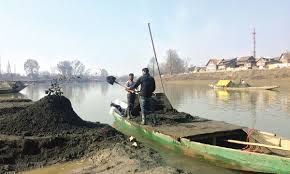
At the heart of the government’s strategy lies a blend of on-ground restoration and policy-driven protection. Authorities are actively implementing measures such as solid waste management initiatives, awareness campaigns, and strict boundary demarcation to prevent encroachments and pollution. Large-scale dredging operations, removal of invasive willow plantations, and continuous water quality monitoring are being carried out—especially in stressed ecosystems like Wular Lake, where ecological degradation has long been a concern.
Simultaneously, habitat management interventions like de-weeding, embankment strengthening, restoration of natural water channels, installation of trash barriers, and improved patrolling infrastructure are helping rejuvenate these wetlands.
In a significant technological leap, the Ecology, Environment & Remote Sensing Department has undertaken GIS-based mapping of all wetlands larger than one hectare, backed by extensive ground-truthing and coordination with Revenue, Wildlife, and Forest departments. So far, 170 wetlands have been scientifically mapped and uploaded in KML format on the National Wetland Portal—enhancing legal protection, transparency, and monitoring.
Detailed documentation has been prepared for six priority wetlands, including the Ahansar–Waskursar Complex, Sanasar Lake, Khushalsar–Gilsar Complex, Anchar–Rakh-i-Kujar Complex, Manasbal Lake, and Narkara. Of these, four have already been submitted for notification, while the remaining two are under technical review—paving the way for formal recognition and stricter conservation laws.
Recognizing that the health of wetlands is deeply linked to their catchments, the government has rolled out Soil & Moisture Conservation (SMC) wor s aimed at reducing soil erosion and sediment inflow. Efforts include afforestation of degraded catchments, construction of check dams, gabion structures, and silt retention systems, and promotion of sustainable land-use practices with active community participation, supported by inter-departmental coordination for integrated watershed management.
Backing this ambitious ecological mission is a substantial financial commitment. Over the past five years, Rs 14,647 lakh under UT Capex and Rs 900 lakh under the National Plan for Conservation of Aquatic Ecosystems (NPCA) have been sanctioned for the restoration of Wular Lake, while Rs 1,073.69 lakh has been expended on soil and water conservation works.
With five wetlands already designated as Ramsar Sites and more moving towards notification, Jammu and Kashmir is steadily building a robust framework for wetland governance. The integration of science, and funding, and community participation is expected to play a crucial role in restoring ecological balance and securing the future of the region’s invaluable water bodies.
