
Kashmir’s Frozen Reservoirs Are Melting Away
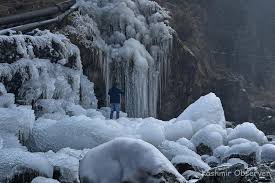
Satellites Capture a Himalayan Crisis in Motion
Nearly 30% Glacier Loss in Four Decades Raises Alarm Over Valley’s Water Security and Climate Future
Our Special Correspondent
Srinagar: The crisis unfolding in Kashmir’s high mountains is no longer hidden in remote valleys — it is visible from space.
Decades of satellite imagery have confirmed that glaciers across the Kashmir Himalaya have shrunk by nearly 29 percent between 1980 and 2018, exposing vast stretches of bare rock where thick ice once stood.
The findings, based on long-term analysis of Landsat and Sentinel satellite data, show that the Valley’s frozen lifelines are retreating at a worrying pace.
Among the worst affected is the iconic Kolahoi Glacier, the main source of the Lidder River. Scientists say Kolahoi has lost a significant portion of its area over the past six decades, with its snout retreating steadily year after year. The Machoi Glacier along the Srinagar-Leh axis has recorded similar shrinkage since the 1970s.
Glaciers function as natural water towers, storing winter snow and releasing melt water gradually through summer. Their decline threatens the long-term flow of rivers like the Jhelum River, which sustains agriculture, hydropower and drinking water supply across the Valley.
Experts warn that while short-term melting may temporarily increase river discharge, the long-term picture is grim: reduced ice mass will eventually mean reduced summer flows. The retreat also increases the risk of glacial lake outburst floods as melt water accumulates behind unstable ice and debris dams.
The shrinking glaciers come against the backdrop of repeated dry winters, erratic snowfall and rising temperatures in Kashmir — all accelerating ice loss at higher altitudes.
What satellites reveal in silent images is a loud warning for the Valley: the Himalayan ice that has sustained generations is no longer permanent. And if warming trends continue, Kashmir’s water future could face unprecedented uncertainty.
