
Vanishing Wetlands
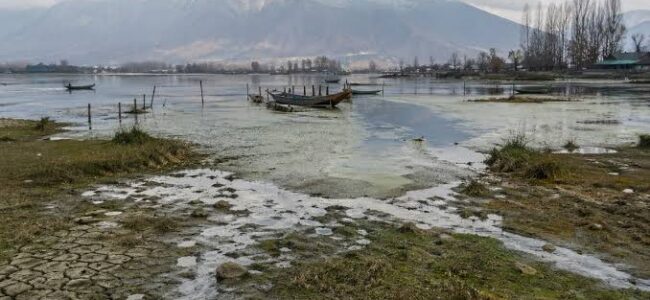
Kashmir’s Natural Flood Buffers Are Fast Disappearing
More than 315 lakes and water bodies have disappeared since 1967, while hundreds more have shrunk due to encroachment and pollution
Scientists warn the loss of wetlands is increasing flood risks, threatening biodiversity and jeopardising the Valley’s water security
Srinagar: They are often called the “kidneys of the ecosystem” and the Valley’s natural flood reservoirs. Yet, Jammu and Kashmir’s wetlands — once sprawling expanses of marshes, lakes and flood basins — are disappearing at an alarming pace, with scientists warning that their degradation could have far-reaching consequences for the region’s ecology, water security and disaster resilience.
A growing body of scientific evidence suggests that the Union Territory’s wetlands are under unprecedented stress from rapid urbanisation, encroachment, pollution, siltation and climate change.
According to a recent study by the Ministry of Statistics and Programme Implementation, Jammu and Kashmir’s wetland area has shrunk by nearly 120 hectares over the past decade, declining from 1,64,230 hectares in 2017-18 to 1,64,110 hectares in recent years. Excessive habitat destruction, pollution and human intervention were identified as the primary causes behind the decline.
The losses, however, are far deeper than recent statistics indicate.
Government reports and scientific studies show that more than 315 of Kashmir’s 697 natural lakes and water bodies have disappeared since 1967, while another 203 lakes have undergone significant shrinkage, fundamentally altering the Valley’s hydrological landscape.
Environmental experts say the disappearance of wetlands is directly linked to the increasing incidence of urban flooding witnessed in Kashmir over the past decade.
“These wetlands function like giant sponges. They absorb excess water during periods of heavy rainfall and release it gradually into rivers and streams,” said noted earth scientist and glaciologist Prof Shakil Ahmad Romshoo, who has repeatedly warned that the loss of floodplains and marshes has reduced Kashmir’s capacity to withstand extreme weather events.
Scientific assessments indicate that Srinagar alone lost nearly 91 square kilometres of wetlands and marshy areas between 1911 and 2004 due to unplanned urban expansion and the conversion of flood basins into residential colonies and commercial spaces.
Experts believe this transformation significantly amplified the devastating floods of September 2014 by reducing the Valley’s natural water retention capacity.
Among the most threatened wetlands is Hokersar, Kashmir’s only Ramsar-designated wetland reserve for waterfowl and one of South Asia’s most important wintering grounds for migratory birds.
Studies reveal that Hokersar’s area has declined from 1,875 hectares in 1969 to nearly 1,300 hectares by 2008, representing a reduction of almost 30 per cent in less than four decades. Marshy habitats within the wetland have also shrunk considerably, affecting aquatic biodiversity and bird habitats.
The wetland, which once hosted nearly six lakh migratory and resident birds annually, has witnessed a decline in avian populations due to siltation, falling water levels, encroachments and the spread of willow plantations.
Wular Lake, Asia’s largest freshwater lake and one of Kashmir’s most important ecological assets, faces similar challenges.
Once considered a massive flood basin of the Jhelum River, Wular has been steadily shrinking because of encroachment, willow plantations, silt deposition and unregulated land-use changes. The lake contributes nearly 54 per cent of Kashmir’s total fish production, supporting thousands of fishing families whose livelihoods now face increasing uncertainty due to declining water levels and fish stocks.
Recent restoration efforts by the Wular Conservation and Management Authority have resulted in the removal of invasive willow plantations and partial recovery of wetland areas, even leading to the reappearance of lotus flowers after nearly three decades. Experts, however, caution that ecological restoration requires sustained interventions and long-term protection measures.
Scientists warn that the disappearance of wetlands is not merely an environmental issue but a growing socio-economic concern.
Wetlands recharge groundwater, regulate river flows, improve water quality, sequester carbon, support agriculture and fisheries and provide habitats to thousands of species of birds, fish and aquatic plants. Their degradation increases the risk of floods, droughts and biodiversity loss.
A recent scientific assessment of Kashmir’s wetland catchments found that nearly 42 per cent of Wular’s catchment area falls under high or very high ecological vulnerability, while significant portions of Hokersar and Anchar wetlands are also under severe ecological stress due to human disturbances and landscape fragmentation.
Officials in the Department of Ecology, Environment and Remote Sensing have repeatedly described wetlands as the “kidneys of the ecosystem” and stressed the need for stronger conservation measures, including demarcation of boundaries, anti-encroachment drives and restoration programmes.
Environmentalists, however, argue that unless urban planning and land-use policies are fundamentally reoriented, restoration projects alone may not be enough.
As climate change accelerates glacial melting and extreme weather events become more frequent across the Himalayas, the fate of Kashmir’s wetlands is increasingly becoming intertwined with the region’s future water and ecological security.
For generations, these marshes and lakes quietly protected the Valley from floods, sustained livelihoods and nurtured biodiversity.
Today, scientists warn that saving Kashmir’s wetlands is no longer merely a conservation issue — it is a matter of environmental survival.
