
Kashmir’s White Mountains Are Turning Brown as Glaciers Retreat: Study
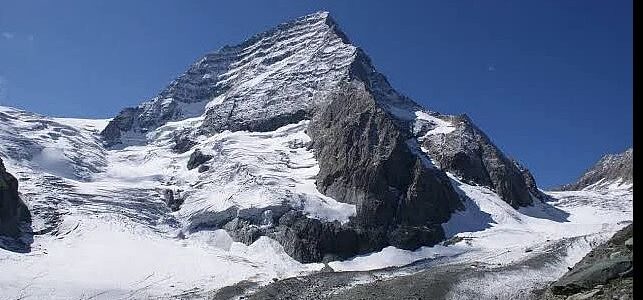
Nearly 30 sq km of glacier cover lost in four decades as six glaciers disappear completely
Scientists say exposed rock, soot pollution and rising temperatures are reshaping the Himalaya
Our Special Correspondent
Srinagar: The iconic white skyline of Kashmir’s Himalaya is slowly fading. Mountains once cloaked in year-round snow and sprawling glaciers are increasingly revealing dark rock, loose sediment and fragmented ice, signalling a profound transformation in the region’s high-altitude landscape.
A long-term scientific assessment conducted by researchers from the University of Kashmir has found that glaciers across the Kashmir Himalaya are retreating rapidly, altering not only the region’s appearance but also its hydrology and climate dynamics.
The study, based on satellite imagery, GPS surveys and geomorphological investigations carried out between 1980 and 2018, mapped 147 glaciers across Kashmir and documented a loss of nearly 30 square kilometres of glacier area over the 38-year period.
Researchers found that six glaciers disappeared entirely, while several others broke into smaller and more vulnerable ice bodies.
Scientists say the retreat of glaciers is exposing vast stretches of barren mountain terrain that had remained hidden beneath snow and ice for centuries. Newly exposed rocky surfaces, expanding periglacial zones, moraine-dammed lakes and braided meltwater channels are becoming increasingly common across Kashmir’s upper reaches.
According to the researchers, the upper Himalaya is gradually transitioning from a snow-dominated environment into a rock-dominated landscape.
The study, led by noted glaciologist Professor Shakil Ahmad Romshoo and his team, identified the period between 1992 and 2013 as the phase of most rapid glacier retreat, coinciding with rising temperatures and changing precipitation patterns across the region.
Scientists observed that a growing proportion of winter precipitation in high-altitude areas is now falling as rain rather than snow, weakening the natural process through which glaciers replenish themselves.
The snowline, they noted, is steadily moving upwards and has become one of the clearest indicators of climate change in the Himalaya.
Lower altitude glaciers and those located on south-facing slopes were found to be melting at a faster pace due to greater exposure to sunlight, while smaller glaciers emerged as the most vulnerable, with some losing more than 40 per cent of their total area.
The Lidder and Sindh river basins, which host a large share of Kashmir’s glaciers, recorded some of the highest rates of glacier loss, raising concerns over the future stability of these critical freshwater reserves.
The researchers also identified black carbon pollution as a major contributor to accelerated melting. Soot particles settling on snow reduce its ability to reflect sunlight, causing glaciers to absorb more heat and melt faster.
Scientists warned that as reflective snow surfaces disappear and darker rocks become exposed, the mountains could absorb even more solar energy, creating a feedback loop that accelerates warming and glacier retreat.
The study further highlighted emerging changes in river systems. While glacier-fed streams initially witnessed increased water flow due to rapid melting, discharge levels have begun to decline in some areas as ice reserves continue to shrink.
For generations, the snow-clad peaks of Kashmir symbolised permanence and resilience. Scientists now warn that this permanence is steadily retreating higher into the Himalaya, leaving behind mountains that are increasingly brown where they were once white.
