
Monsoon Fury May Trigger Multiple Cloudbursts in J&K
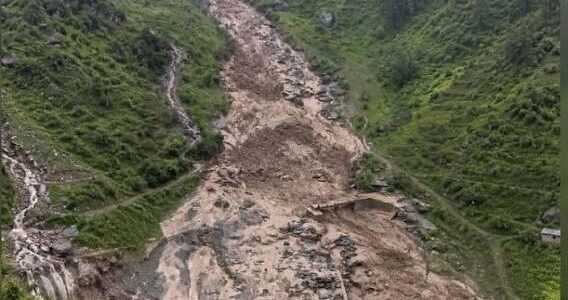
Weather experts warn of intense rainfall spells, flash floods and landslide risks in vulnerable areas
Our Special Correspondent
Srinagar: With monsoon currents gradually advancing towards the western Himalayan region, weather experts have warned that Jammu and Kashmir could witness intense rainfall episodes, including the possibility of cloudbursts in vulnerable mountainous areas over the coming weeks.
The warning comes amid rising temperatures, changing atmospheric patterns and increasing moisture intrusion from the plains, conditions that experts say often create a volatile weather mix across the region’s fragile terrain.
Director of the Meteorological Centre Ladakh, , said that while monsoon systems usually weaken by the time they reach Jammu and Kashmir, they can still trigger localized extreme weather events, particularly in hilly and mountainous districts.
“Monsoon rainfall in the Himalayan region behaves differently. Instead of widespread uniform rain, we often see highly localized intense spells which can lead to cloudbursts, flash floods and landslides,” Lotus said.
He noted that districts along mountainous belts, including parts of Chenab Valley, Pir Panjal and higher reaches of Kashmir, remain particularly vulnerable whenever strong moisture-laden winds interact with western disturbances or local topography.
Experts say the unique geography of Jammu and Kashmir makes it highly susceptible to sudden weather changes. Warm air rising rapidly along mountain slopes can result in the formation of towering rain-bearing clouds capable of releasing massive amounts of rain within a short period.
Independent weather forecaster Faizan Arif said recent climate trends indicate that extreme weather events are becoming more frequent across the Himalayan belt.
“Over the past few years, rainfall patterns in Jammu and Kashmir have become increasingly erratic. We are witnessing longer dry spells followed by sudden heavy downpours. Such patterns increase the possibility of cloudburst-like situations, especially during peak monsoon activity,” Arif said.
He added that rapid urbanisation, shrinking water channels and environmental degradation in several areas have further heightened vulnerability to flash flooding.
The experts cautioned that even short-duration intense rainfall could trigger landslides, shooting stones and waterlogging along highways and interior roads, particularly in areas already weakened by summer heat and soil instability.
Officials said disaster management agencies and district administrations are closely monitoring weather updates, while advisories are likely to be issued for vulnerable districts if monsoon activity intensifies in the coming days.
The possibility of cloudbursts remains a major concern in Jammu and Kashmir due to the region’s history of sudden weather disasters. Several parts of the Union Territory have witnessed devastating flash floods and landslides in the past, often linked to intense localized rainfall events.
