
Kashmir’s ‘Dying’ Ice: Rapid Melting of Kolahoi Glacier Sounds Climate Alarm
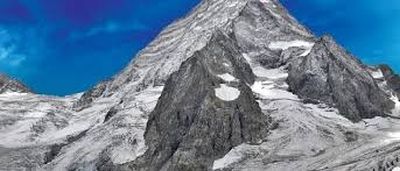
Kashmir University studies reveal accelerating glacier retreat, raising fears over water security, ecological stability in the Valley
Scientists warn rising temperatures, declining snowfall and human pressure are pushing the Himalayas toward an irreversible crisis
Srinagar: The majestic Kolahoi Glacier, often called the “Goddess of Light” and regarded as Kashmir’s largest glacier, is melting at an alarming rate, triggering fresh concerns among scientists and environmental experts over the Valley’s long-term water security and ecological future.
Situated in the upper reaches of Lidder Valley near Pahalgam, the glacier serves as a major source of freshwater for several streams and rivers that sustain agriculture, drinking water supplies and livelihoods across south Kashmir. However, a series of recent scientific studies, including those conducted by the University of Kashmir, indicate that the glacier is shrinking rapidly under the impact of climate change, warming temperatures and declining snowfall.
A recent study by researchers from the Department of Geoinformatics and the Centre of Excellence for Glacier Studies at the University of Kashmir revealed extensive glacial retreat and major geomorphological changes in the Kolahoi glacier valley. The study, published in the Journal of Maps, described visible evidence of glacier recession and environmental transformation in the northwestern Himalayas. Researchers used satellite imagery, digital elevation models and field surveys to map the glacier’s changing landscape.
The study, led by noted glaciologist Shakil Ahmad Romshoo along with researchers Mohammad Saleem, Omar Jaan Paul and Reyaz Ahmad Dar, found that the glacier had once advanced nearly 20 kilometres beyond its present position during the Last Glacial Maximum, highlighting the dramatic scale of ice loss over centuries.
Scientists say the current pace of melting has intensified over recent decades due to rising average temperatures and reduced winter precipitation in the Himalayas.
“Glaciers are extremely sensitive indicators of climate change. The rapid retreat of Kolahoi Glacier reflects the changing climate patterns in the Kashmir Himalaya,” said Prof. Shakil Ahmad Romshoo, who has led several glacier-monitoring studies in the region. “If this trend continues, it will have serious implications for water availability, agriculture and disaster risks in the Valley.”
Earlier hydrological studies on Kolahoi Glacier had already shown a persistent negative mass balance, meaning the glacier is losing more ice annually than it gains through snowfall accumulation. Researchers observed that the glacier’s retreat accelerated particularly after the year 2000 as warmer summers and erratic snowfall patterns became more frequent.
Environmental experts warn that continued glacier retreat could reduce river discharge in the long term, affecting irrigation networks, hydropower generation and drinking water supplies across Kashmir. The shrinking ice reserves may also increase the risk of glacial lake outburst floods (GLOFs), flash floods and landslides in vulnerable mountain regions.
Scientists associated with the University of Kashmir’s glacier studies programme have also stressed the need for continuous monitoring of Himalayan glaciers using satellite observations, field research and climate modelling. Recent international collaborations involving the University of Kashmir are focusing on glacier behaviour, snow dynamics and early warning systems for glacier-related disasters in the Himalayas.
Experts say the effects of climate change in Kashmir are becoming increasingly visible through shorter winters, declining snow cover, frequent heatwaves and erratic rainfall patterns.
“Glaciers are natural reservoirs that regulate water flow in Himalayan rivers,” an environmental researcher associated with the University of Kashmir said. “Their disappearance will not only impact mountain ecosystems but also millions of people dependent on glacier-fed water systems downstream.”
Apart from climate change, environmentalists blame unchecked tourism, deforestation, road expansion and unplanned construction in ecologically fragile mountain zones for accelerating environmental degradation in the region.
Scientists have called for urgent policy interventions, including sustainable tourism practices, afforestation drives, scientific glacier monitoring and stronger climate adaptation measures to protect Kashmir’s fragile Himalayan ecosystem.
As the white expanse of Kolahoi continues to recede year after year, researchers warn that the glacier is no longer merely a symbol of Kashmir’s natural beauty — it is becoming a stark reminder of the climate crisis unfolding across the Himalayas.
