
Purple Gold Blooms in Kashmir: Lavender Revolution Transforms J&K’s Farms
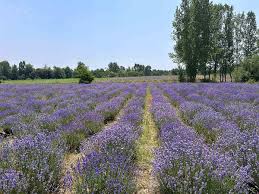
From barren fields to fragrant profits, farmers embrace lavender cultivation across Jammu and Kashmir
Young growers, women and startups fuel aromatic farming boom as lavender emerges as Valley’s new cash crop
Our Special Correspondent
Srinagar: Once known mainly for apples, saffron and paddy, the fields of Jammu and Kashmir are now turning shades of purple as the Union Territory witnesses a steady rise in lavender cultivation, marking what many farmers describe as a quiet agricultural revolution.
Across parts of Bhaderwah, Doda, Udhampur, Pulwama and Budgam, the sweet fragrance of lavender is no longer confined to gardens. Farmers are increasingly shifting towards aromatic farming, attracted by low investment, high returns and growing market demand for lavender oil and related products.
What began as a small scientific intervention has now evolved into a livelihood movement, especially among unemployed youth and women entrepreneurs looking for alternatives to traditional crops.
“We never imagined these dry fields could generate this much income,” said Abdul Rashid, a farmer from Doda who switched from maize cultivation to lavender farming three years ago. “Earlier, the land remained mostly unproductive. Today, buyers come directly to us for lavender flowers and oil.”
Farmers say the crop requires comparatively less water, survives well in hilly terrain and offers multiple income streams through oil extraction, perfumes, soaps and medicinal products.
In many villages, lavender has also become a symbol of reverse migration, with young people returning to farming after seeing the profits generated through aromatic cultivation.
“We used to think farming had no future,” said Shabnam Akhter, a young cultivator from Bhaderwah. “Lavender changed that mindset. Women are now actively participating in harvesting, drying and processing.”
Officials associated with agricultural and floriculture departments say Jammu and Kashmir’s climatic conditions are ideal for lavender cultivation, especially in the temperate belts of Chenab Valley and parts of central Kashmir.
The expansion of lavender farming has also led to the establishment of small distillation units, helping farmers extract essential oil locally instead of sending raw produce outside the region.
Experts believe the “lavender revolution” is not just improving incomes but also diversifying the region’s fragile agriculture economy, which often suffers losses due to erratic weather and shrinking landholdings.
Agricultural scientists say lavender farming has opened new opportunities in agri-tourism as well, with blooming purple fields attracting visitors and social media creators during flowering season.
“People now come to villages just to see lavender farms and take photographs,” said Mohammad Yousuf, another farmer from Bhaderwah. “It has created excitement and hope among growers.”
Farmers, however, say sustained government support, better marketing facilities and easier access to processing units will be crucial for the long-term success of aromatic farming in Jammu and Kashmir.
Despite challenges, the growing purple fields across the mountains are increasingly being seen as a sign of changing rural aspirations — where fragrance, entrepreneurship and farming are blending to create a new story of prosperity in Jammu and Kashmir.
