
Echoes Beneath the Mountains : NHPC Ignites Work on 240 MW Uri-I Stage-II Power Project
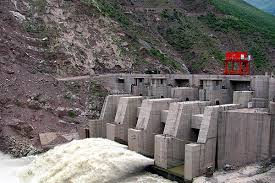
First blast at Mohura’s Adit-3 marks a major step in expanding Kashmir’s hydroelectric strength; officials call it a milestone in the Valley’s energy future
Srinagar: In a significant stride toward strengthening Jammu and Kashmir’s energy infrastructure, NHPC on Monday formally launched major underground excavation works for the ambitious 240 MW Uri-I Stage-II Hydroelectric Project with the first ceremonial blast at Adit-3 in the Mohura area of Baramulla district of North Kashmir.
The echo of the inaugural blast reverberating through the mountains of north Kashmir marked not merely the beginning of tunnelling operations, but the start of another chapter in the Valley’s long association with hydropower development.
Senior officials present at the site termed the occasion a “major engineering milestone” for the project.
“Today’s first blast at Adit-3 signifies the commencement of one of the most critical stages of the Uri-I Stage-II Hydroelectric Project. This is an important step towards enhancing power generation capacity in Jammu and Kashmir and accelerating infrastructure growth in the region,” an NHPC official said.
Another project engineer associated with the works said the underground excavation phase would form the backbone of the project’s civil construction activity.
“The tunnelling and underground works are technically challenging, especially in mountainous terrain, but all preparations and safety mechanisms have been put in place. The project is progressing in a planned manner,” the official said.
Nestled amid the rugged landscape along the Jhelum river basin, the Uri-I Stage-II project is envisioned as an extension of the existing Uri hydropower infrastructure and is expected to significantly augment electricity generation capacity in Jammu and Kashmir once completed.
Officials said the commencement of underground works at Adit-3 is among the most crucial phases of the project, as it paves the way for tunnel excavation and other core civil works essential for the underground powerhouse system.
The project has generated optimism in north Kashmir, where large infrastructure ventures are often seen as drivers of employment and economic activity. Local residents expressed hope that the construction phase would create opportunities for skilled and unskilled workers while boosting business activity in the surrounding areas.
A senior NHPC representative said the corporation remains committed to maintaining environmental safeguards and engineering standards during the execution of the project.
“Hydropower remains one of the cleanest and most sustainable sources of energy. Through projects like Uri-I Stage-II, we are contributing not only to the power sector but also to regional development and employment generation,” the official added.
Experts believe the project will play an important role in strengthening regional energy security at a time when electricity demand in Jammu and Kashmir continues to rise steadily. With the Union Territory possessing enormous untapped hydroelectric potential, projects such as Uri are viewed as central to reducing dependence on external power purchases.
The Mohura belt, historically linked with power generation in Kashmir, once again witnessed the return of heavy engineering activity as drilling machines, excavation teams and technical personnel moved into the mountainous terrain.
As excavation begins deep beneath the hills of Baramulla, the Uri-I Stage-II project now enters a defining construction phase — carrying with it the promise of more power, economic opportunity and renewed infrastructure momentum for Kashmir.
