
Lotus blooms in Bengal as TMC suffers stunning collapse
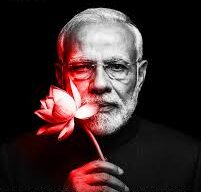
Kolkata: In a sweeping and potentially historic mandate, the Bharatiya Janata Party surged past the majority mark in West Bengal, winning 152 seats and leading in 52 others, to end the 15-year rule of the Trinamool Congress and redraw the state’s political map in saffron hues.
The verdict will mark the BJP’s first taste of power in the state.
The BJP stormed past the majority mark in the West Bengal assembly on Monday, winning 156 seats and leading in 52 others, taking its overall tally to 208
The signs were evident in the early leads, and it soon hardened into a sweep nearing a two-thirds majority.
The scale and spread of the BJP’s surge — cutting across regions and demographics — underlined a decisive mandate, with the party making deep inroads into areas that had long been considered TMC strongholds.
The TMC lagged far behind with a handful of victories and led in fewer than 90 seats as counting progressed.
The scale of the surge, as the BJP breached the halfway mark of 148 in the 294-member Assembly well before counting reached its midpoint, hinted not just at a change of guard, but also to a structural shift in Bengal’s political landscape.
The BJP’s vote share rising to around 45 per cent from 38 per cent in 2021 marks both consolidation and expansion, while the TMC’s dip to nearly 40.94 per cent from 48 per cent in the last assembly polls reflects erosion across segments that anchored its sweep five years ago.
Amid the saffron wave, Chief Minister Mamata Banerjee is trailing by 10,994 in Bhabanipur, with the TMC supremo polling 56,245 votes against her nearest BJP rival and leader of the opposition Suvendu Adhikari’s 67,239, after 18 of the total 20 rounds.
In Nandigram, another marquee battleground, Adhikari was ahead by over 1,500 votes against the TMC’s Pabitra Kar after 15 rounds of counting.
Through the day, Mamata urged party workers to remain at counting centres, alleging a “game plan” to project an early BJP lead, even as trends showed the party trailing in large parts of the state.
“We are ahead in many seats which are not being reflected,” she claimed, pointing to uneven counting rounds across constituencies, where in several BJP-leading seats only five to six rounds had been completed out of the typical 18 to 22.
The BJP’s surge cut across geographies from north Bengal to Junglemahal, from border districts to industrial belts.
Seats like Dinhata, Gosaba, Baghmundi, Bankura, Binpur and Nayagram reflected traction in tribal and rural belts, while leads in Asansol Dakshin, Durgapur Purba and Kolkata pointed to gains in industrial and urban regions.
In contrast, the TMC’s resistance appeared confined to pockets — parts of Kolkata such as Bhabanipur, Ballygunge and Entally, and scattered rural strongholds like Singur, Raina and Jamalpur.
Perhaps more telling was the churn in the 177 constituencies where voter deletions had exceeded past victory margins — a latent faultline that appears to have translated into electoral movement.
The BJP held ground in its existing seats in this category while making inroads into TMC bastions, suggesting a deeper realignment rather than a transient swing.
The scale of the setback was reflected in the fate of senior TMC leaders. At least 20 ministers, including Bratya Basu, Manas Ranjan Bhunia, Shashi Panja and Chandrima Bhattacharya, were trailing at various stages.
In Sabang, a seat long associated with Bhunia, BJP’s Amal Kumar Panda edged ahead in the early rounds. In Dinhata, Udayan Guha trailed by over 6,000 votes. In Kolkata, BJP’s Purnima Chakraborty led over minister Shashi Panja, signalling cracks even in the TMC’s urban strongholds.
The BJP converted leads into wins early in constituencies like Kalimpong, Darjeeling, Monteswar, Bhatar, Medinipur and Asansol Dakshin, reinforcing the breadth of its surge.
For the TMC that had built its dominance on welfare delivery, centralised leadership and booth-level mobilisation, the numbers suggested that its political machine had faltered across layers.
The BJP’s victory marks a structural breakthrough in a state that had long resisted its expansion.
After years of incremental growth from a marginal presence to a formidable opposition, the party has now converted momentum into power, expanding its political grip deep into eastern India.
Organisationally, the win validates the BJP’s sustained investment in cadre-building, booth management and social coalitions across diverse regions- from tribal belts to border districts.
Politically, it reinforces the BJP’s positioning as the principal challenger capable of dislodging entrenched regional forces.
But the mandate also comes with immediate tests — governance delivery in a politically volatile state, managing local leadership equations, and translating electoral gains into administrative credibility.
For the TMC, the defeat marks a structural rupture. After 15 years in power, the party now confronts the challenge of transition– from ruling to opposition.
Anti-incumbency, allegations of corruption, and organisational fatigue appear to have converged into a decisive setback, exposing vulnerabilities that had remained masked by previous victories.
The result raises questions about strategy, timing and internal balance, particularly within the leadership dynamic between Mamata Banerjee and her nephew Abhishek Banerjee, who had taken on a larger organisational role in recent years.
For the state, the result marks a moment of transition from continuity to change.
