
Greying Valley Faces New Reality as Old Age Homes Rise in Kashmir
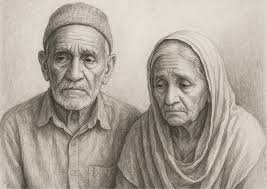
Changing family structures, migration and ageing population drive demand for institutional elderly care
Our Special Correspondent
Srinagar: Kashmir, long known for its strong joint family system and deep-rooted respect for elders, is witnessing a quiet yet significant social shift with the gradual rise of old age homes across the Valley.
Traditionally, elderly members were cared for within extended families, holding a central place in decision-making and social life. However, changing socio-economic patterns, increasing migration of younger generations, and the steady shift towards nuclear families are weakening this support system, leaving many elderly individuals vulnerable to isolation.
Official estimates indicate that nearly 9 to 10 per cent of Jammu and Kashmir’s population is now aged 60 and above, with projections suggesting a steady rise in the coming years. By 2031, this figure is expected to increase significantly, creating additional pressure on both families and the administration to ensure adequate care and support systems.
A senior official from the Social Welfare Department said the demand for institutional care is gradually increasing.
“We are seeing more cases where elderly persons are either living alone or lack adequate family support. In such situations, old age homes are emerging as an important support system,” the official said.
At present, only a handful of old age homes—run by the government, non-governmental organisations, and charitable bodies—are operational in districts such as Srinagar, Ganderbal, and Bandipora. These facilities provide basic shelter, food, and medical care, with some offering specialised services for those with chronic illnesses.
Health concerns among the elderly are also on the rise. Officials note that a large proportion of senior citizens suffer from chronic conditions, while a considerable number experience loneliness and depression, underlining the growing need for structured care facilities.
Authorities acknowledge that while institutional care is not a replacement for family support, it is becoming a necessary option in certain cases. “Our focus remains on strengthening community-based care and support schemes, but old age homes are increasingly becoming part of the social landscape,” the official added.
The emergence of old age homes in Kashmir reflects more than just a demographic trend—it signals a broader transformation in society, where traditional values are being reshaped by modern realities, raising important questions about care, responsibility, and the place of the elderly in a changing world.
