
Silence in poet’s Village: Mehjoor day passes without tribute in native Mitrigam
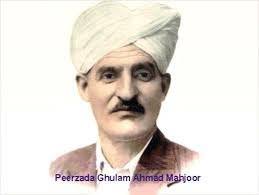
Pulwama: Mitrigam, the ancestral village of Kashmir’s celebrated poet Ghulam Ahmad Mehjoor in south Kashmir’s Pulwama district, wore an unusual look of silence on April 9 as “Mehjoor Day” passed without any commemorative event in his hometown.
While literary organisations and institutions across Jammu and Kashmir marked the occasion with seminars, cultural programmes, and poetry sessions to pay homage to the legendary poet, the absence of any such event in his own village has left residents disappointed and concerned.
Observed annually, Mehjoor Day is meant to celebrate the poet’s literary contributions, revive his message, and introduce younger generations to his thought and poetry. However, this year, the breaking of this long-standing tradition in Mitrigam has raised serious questions among locals and literary circles alike.
Residents recalled that in 2005, the government had taken over Mehjoor’s ancestral house with plans to convert it into a memorial site.
The proposal included the establishment of a library and a seminar hall aimed at preserving the works of Mehjoor and other Kashmiri poets, while also providing a space for students and the public to engage with the region’s literary heritage.
Nearly two decades later, the project remains incomplete. The partially constructed library building now stands in a dilapidated condition, awaiting completion—highlighting a stark gap between official promises and ground reality.
Locals expressed strong resentment over the neglect, particularly on such a significant day.
“In the past, both the birth and death anniversaries of Mehjoor were observed with proper functions here. Today, the absence of any event in his own village is deeply unfortunate,” said Ghulam Hassan, a local elder. He added that such indifference not only undermines the legacy of a great poet but also erodes the cultural identity of the area.
Several other residents accused the administration of ignoring the village despite earlier commitments. They said that when the property was taken over, promises were made to develop it into a meaningful cultural site, but little has been done so far. The deteriorating condition of the library and lack of commemorative events stand as clear indicators of official apathy.
Born on August 11, 1887, in Mitrigam, Ghulam Ahmad Mehjoor—originally named Ghulam Ahmad Peerzada—is regarded as a revolutionary figure in Kashmiri literature. Through his poetry, he championed social awareness, patriotism, and the aspirations of the common people.
Initially writing in Urdu, he later adopted Kashmiri as his primary medium in 1915, significantly contributing to its literary development. His poetry gained immense popularity during his lifetime and continues to resonate across Kashmir—in weddings, festivals, and even in the fields among working communities.
His works have been compiled in multi-volume collections such as Payam-e-Mehjoor and Kalam-e-Mehjoor, and have also been translated into Urdu and English, earning him recognition beyond the region.
