
Kashmir’s Timeless Crafts on the Brink
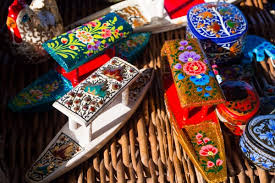
Papier-Mâché, Sozni and Carpet Weaving Fade as Artisans Struggle to Stay Afloat (MAIN HEADING)
Falling demand, machine-made imitations & shrinking incomes push centuries-old heritage towards quiet extinction
Our Special Correspondent
Srinagar: Kashmir’s centuries-old handicraft traditions—once the pride of its cultural and economic identity—are facing an unprecedented decline, with artisans warning that the famed arts of papier-mâché, Sozni embroidery and hand-knotted carpet weaving are steadily losing ground to modern market forces and neglect.
Known globally for their finesse and intricate detailing, these crafts have long been associated with Kashmir’s rich heritage. However, changing consumer preferences, competition from machine-made products and inadequate financial returns have left many artisans struggling to sustain their livelihoods.
In the old quarters of Srinagar, where generations have devoted their lives to papier-mâché, workshops are witnessing a visible slowdown. Artisans say the labour-intensive craft, which involves days of preparation and hand-painting, is no longer economically viable.
“People admire the work, but they don’t want to pay for the effort,” says Ghulam Nabi, a veteran artisan. “It takes days to complete a single piece, but the price we get barely covers the cost.”
Papier-mâché, introduced to Kashmir centuries ago and once patronised by royalty, is increasingly being replaced by cheaper, factory-made alternatives that mimic traditional designs at a fraction of the cost.
A similar story unfolds in the field of Sozni embroidery, a highly skilled craft known for its delicate needlework on fine fabrics such as Pashmina. Artisans, mostly women, spend months creating intricate patterns, yet returns remain disproportionately low.
“We put our eyesight and years of experience into every shawl,” says Naseema Begum, a Sozni artisan. “But in the market, machine work is sold as handwork. Customers cannot tell the difference.”
The lack of awareness among buyers, coupled with the absence of strict quality control, has further eroded the value of authentic craftsmanship.
Meanwhile, the carpet weaving sector—once a cornerstone of Kashmir’s export economy—is also witnessing a steady decline. Many traditional weavers have abandoned their looms in search of more stable sources of income.
“Earlier, every household in our area had a loom,” says Abdul Rashid, a carpet weaver from Budgam. “Now, you will hardly find a few. The younger generation does not want to continue because there is no future in it.”
Hand-knotted carpets, known for their durability and intricate designs, require months or even years to complete. However, artisans allege that middlemen and market fluctuations often leave them with minimal earnings.
Industry observers point out that while government schemes and initiatives exist, their impact on the ground remains limited. Artisans cite lack of direct market access, inadequate financial support and insufficient promotion of authentic handmade products as key challenges.
Experts warn that if the current trend continues, Kashmir risks losing not only its traditional crafts but also a vital part of its cultural heritage.
Despite the challenges, artisans continue to hold on, driven by a deep sense of pride and identity tied to their work.
“This is our heritage,” says Ghulam Nabi. “We learnt it from our forefathers. If we leave it, a part of Kashmir will be lost forever.”
As the looms fall silent and brushes dry up, the future of Kashmir’s iconic crafts hangs in the balance—caught between the weight of tradition and the realities of a rapidly changing world.
