
110 Industrial Estates, Thousands of Units: J&K’s Industrial Push Gains Ground Amid Revival Drive
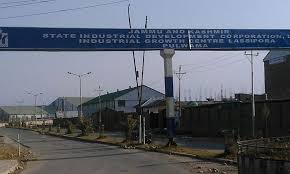
From Pulwama’s expanding hubs to MSME revival schemes, government banks on transparency, incentives and infrastructure to fuel industrial growth
Our Special Correspondent
Srinagar: Jammu and Kashmir’s industrial landscape is witnessing a significant transformation, with the government laying out an expansive roadmap that combines infrastructure expansion, policy-driven transparency and targeted revival of struggling units.
In a detailed reply to a legislative query by MLA Waheed-ur-Rehman Para, the Industries and Commerce Department revealed that a total of 110 industrial estates—64 existing and 46 new—have been developed across the Union Territory. Spread across districts from Kathua to Kupwara, these estates collectively represent a growing backbone for industrial activity, with thousands of kanals of land already acquired and a substantial portion allotted to entrepreneurs.
Districts like Kathua, Samba and Jammu continue to dominate in terms of industrial land and estates, but the focus is now clearly shifting towards balanced regional growth, with new estates coming up even in districts like Kulgam, Shopian and Ganderbal.
The government asserted that transparency in land allotment has been streamlined through the Single Window Portal, where all available industrial land has been uploaded, ensuring equal access and a rule-based system for aspiring investors. Authorities maintained that allotments are being made strictly under the J&K Industrial Land Allotment Policy 2021–30, backed by a time-bound clearance mechanism.
However, the data also reflects a mixed picture on the ground. While districts like Srinagar boast over 5,400 functional units out of 5,520 registered ones, others such as Anantnag and Budgam show a high number of non-functional units, highlighting persistent challenges in industrial sustainability.
Pulwama, in particular, has emerged as a focal point of industrial expansion. With five fully operational estates—Lassipora, Chatapora, Pulwama, Wuyan and Khrew—the district is witnessing rapid development. Over 2,100 kanals of additional land have been acquired for new estates, while 571 allotments have already been made under successive industrial policies.
The response further reveals strong investor interest, with over 1,200 applications received through the Single Window Portal for Pulwama alone, currently under appraisal. Infrastructure development in these estates is progressing steadily, with most works—ranging from roads and drainage systems to power networks and water supply—already completed. Key projects like Medicity Pulwama and new industrial estates at Lelhar and Hariparigam are also nearing completion.
Financially, the administration has collected over Rs 2.14 crore in application fees, signaling both demand and momentum in the sector.
To address the challenge of sick and non-functional units, the government has rolled out a multi-pronged revival strategy. Guided by the RBI’s MSME rehabilitation framework, initiatives such as the JKMSME Health Clinic aim to identify financial stress early and provide customized solutions.
Further support is being extended through enhanced credit access under schemes like CGTMSE, including reimbursement of guarantee fees on loans up to Rs 10 lakh. Coupled with incentives under the J&K Industrial Policy 2021–30—ranging from SGST reimbursements to subsidies on automation, pollution control and power backup—the government is attempting to create a resilient and investor-friendly ecosystem.
While challenges remain, particularly in reviving non-functional units and ensuring equitable industrial growth, the government’s integrated approach signals a determined push to position Jammu and Kashmir as an emerging industrial hub.
As infrastructure expands and policy support deepens, the Union Territory’s industrial sector appears poised at a crucial turning point—balancing growth ambitions with the need for sustainability and inclusivity.
