
On the Edge: Kashmir’s Border Villages Still Await Smart Bunkers
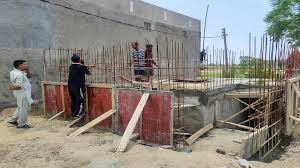
Over 9,500 shelters built and 600 more announced
Gaps, delays and outdated designs leave LoC residents seeking safer, modern protection
Our Special Correspondent
Srinagar: Even as a fragile calm prevails along Kashmir’s borders, thousands of residents in vulnerable villages continue to wait for safer and more advanced bunkers—seen as essential lifelines during episodes of cross-border shelling.
Official figures show that over 9,500 bunkers, including individual and community shelters, have been constructed across Jammu and Kashmir under a centrally sponsored scheme approved in 2017 with an outlay of Rs 415.73 crore.
However, against an initial target of more than 14,000 bunkers, a significant gap persists, particularly in remote and high-risk areas along the Line of Control (LoC) and the International Border.
In a recent initiative, Union Minister Dr Jitendra Singh announced the construction of 600 additional family bunkers, alongside plans for a centralised automated siren system to provide timely alerts during emergencies. “Our aim is to ensure that every vulnerable household has access to safe shelter and early warning mechanisms,” he said, describing the move as a step towards building “smart protection infrastructure” in border areas.
Chief Minister Omar Abdullah has also stressed the need to expand individual bunkers, noting a shift in public preference. “Wherever I went, people said individual bunkers are more useful. We will work to ensure wider coverage in all affected areas,” he said during a recent visit to shelling-hit villages.
Despite these announcements, progress on the ground remains uneven. A senior administrative official admitted that delays in execution and fund utilisation have slowed work in several districts. “While a substantial number of bunkers have been completed, there are still gaps in far-flung areas. Efforts are underway to expedite construction,” the official said.
For residents, the issue goes beyond infrastructure—it is about survival.
“During firing, we have only seconds to react. If bunkers are not nearby, our lives are at risk,” said Mohammad Yousuf, a resident of Uri.
Another villager from Poonch, Rafiqa Begum, said the lack of individual bunkers forces families to take dangerous risks. “Community bunkers are often far from our homes. In the middle of shelling, it becomes difficult for children and the elderly to reach them in time,” she said.
Security experts argue that conventional bunker designs are no longer sufficient. “There is an urgent need for smart bunkers with proper ventilation, sanitation, communication links and integration with early warning systems,” an official associated with border management said. “The proposed siren system will play a crucial role in saving lives during sudden escalations.”
Although ceasefire agreements have reduced the frequency of shelling in recent years, sporadic incidents and persistent tensions continue to keep border communities on edge. Memories of past escalations—marked by civilian casualties and widespread damage to homes—remain vivid.
“Peace here is never permanent. We need bunkers before the next crisis, not after,” said Bashir Ahmad, a resident of Tangdhar.
As the government moves forward with fresh plans, the demand from the ground is clear: faster execution, wider coverage and modern infrastructure.
For now, those living along Kashmir’s borders continue to wait—hoping that the promise of safety arrives before the next crisis.
