
Parched Valley: Is Kashmir Heading Towards Water Crisis?
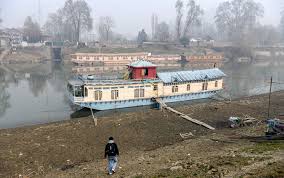
Jhelum flows at historic lows amid alarming rainfall deficit and scant snow
Concerns rising over drinking water and irrigation in the Valley
Our Special Correspondent
Srinagar: Kashmir may be staring at the possibility of a looming water crisis as the Valley’s lifeline—the River Jhelum—continues to flow at historically low levels following a prolonged dry spell, an alarming rainfall deficit and unusually poor snow accumulation on the surrounding mountain ranges.
Hydrological observations over the past few weeks indicate that the discharge levels in the Jhelum have fallen significantly, a development experts say could have serious implications for irrigation, drinking water supply and aquatic biodiversity if the trend continues into the coming months.
Independent weather forecaster Faizan Arif said the Valley has experienced a substantial precipitation deficit this winter, traditionally the most important period for snow accumulation that sustains rivers and streams through the summer.
“The current winter season has recorded a major rainfall and snowfall deficit across Kashmir. Snow accumulation at many mountain stations is far below normal, which is worrying because this snowpack acts as a natural reservoir that feeds rivers like the Jhelum during spring and summer,” Arif said.
He warned that the situation could translate into reduced river discharge in the coming months if significant precipitation does not occur soon.
“Jhelum is already flowing at unusually low levels for this time of the year. If the deficit persists, we may see stress on water resources, particularly during the peak irrigation season,” he added.
Officials from the Meteorological Department Srinagar also acknowledged the concerning trend, linking the low river levels directly to deficient precipitation during the ongoing winter season.
Director Meteorological Department Srinagar Mukhtar Ahmad said the Valley has witnessed an extended dry spell this year.
“Winter precipitation has been below normal across most parts of Kashmir. Snowfall over higher reaches has also been significantly less compared to the average. This inevitably impacts river flows because much of Kashmir’s hydrology depends on snowmelt,” Ahmad said.
While he expressed hope that western disturbances in the coming weeks could bring some precipitation, he noted that recovery from such deficits can be slow if the shortfall remains large.
The declining water levels are also ringing alarm bells in the Public Health Engineering (PHE) Department, which is responsible for supplying drinking water across the Valley.
A senior PHE official said many water supply schemes depend directly on rivers, streams and springs that are fed by snowfall and rainfall.
“If the dry conditions continue, it could affect the discharge of several water sources. While there is no immediate crisis, we are closely monitoring the situation because sustained low flows can impact both drinking water supply and irrigation networks,” the official said.
Environmental observers also warn that persistently low river levels could threaten aquatic ecosystems in the Jhelum basin, which supports several native fish species and wetland habitats.
For now, much depends on the weather systems expected later this spring. But the unusually dry winter and shrinking snow cover have already raised a troubling question across the Valley: whether Kashmir’s famed waters are beginning to run dangerously thin.
