
Jhelum Runs Below Zero in Early March, Rings Alarm Bells in Kashmir
Weak snowpack, warm winter raise fears for irrigation, paddy cultivation
Our Special Correspondent
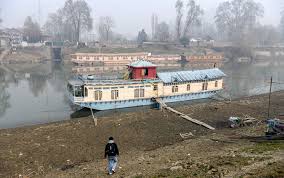
Srinagar: The Jhelum river has dropped to an unusually low level in the first week of March, sparking concerns among weather experts and hydrologists about Kashmir’s water outlook and the possible impact on the upcoming paddy cultivation season.
Data from the Irrigation and Flood Control Department shows that the water level of Jhelum at Sangam touched –0.86 ft at 9:00 a.m. on March 5, indicating that the river is flowing below the zero gauge level, occurrence experts say is rare for this time of the year.
Independent weather forecaster Faizan Arif described the development as a worrying signal about the region’s hydrological health.
“Low water levels of the Jhelum River even in the first week of March is a very serious concern. It may be among the first instances when the river is flowing at such a low level during this time of the year,” Arif said.
He said the situation is particularly striking because February witnessed unusually warm conditions, with temperatures rising more than 10°C above normal on several occasions.
“During the early phase of this warmth, the water level of the river did increase slightly by a couple of feet, but the rise remained short-lived and limited. Historically, when such warm spells affected Kashmir during winter or early spring, the water level of Jhelum used to rise by around 5 to 8 feet, reflecting strong snowmelt from surrounding mountains. However, this year the response remained very weak,” he said.
Arif said the river slipping back into negative levels so early in March suggests that winter precipitation and snow accumulation remained extremely poor this year.
“The fact that the water level has once again dropped into negative figures even in early March clearly indicates that winter precipitation and snow accumulation were extremely low this year, leaving very little snowpack available to sustain meltwater discharge,” he added.
Experts say the trend could have implications for Kashmir’s agriculture, particularly the water-intensive paddy crop, which forms the backbone of the Valley’s farming economy.
“In Kashmir, paddy nursery preparation usually begins in April and May, when farmers rely heavily on water from rivers, streams and irrigation canals fed by snowmelt. Limited water availability during this period could affect nursery preparation and early sowing stages,” Arif said.
Director Meteorological Department Srinagar, Mukhtar Ahmad, said the low levels in the river reflect the deficit in winter precipitation witnessed this season.
“This winter has been largely dry with below-normal precipitation across many parts of Jammu and Kashmir. Snowfall in the mountains, which normally sustains river flows in spring, has also remained significantly lower,” Ahmad said, adding that the department is closely monitoring upcoming weather systems.
Echoing similar concerns, Director MeT Ladakh, Sonam Lotus, said weak snow accumulation across the western Himalayas could affect river discharge across the region.
“Snowfall in the higher reaches has been inconsistent this winter. Snowpack in the mountains plays a crucial role in sustaining rivers like the Jhelum during spring and early summer,” Lotus said.
Climate experts from Kashmir University said the emerging pattern is consistent with the broader impact of climate variability in the Himalayas, where winters are increasingly witnessing warmer temperatures and erratic snowfall.
“Such hydrological signals during early spring are indicators of changing climate patterns in the Himalayan region. Reduced snow accumulation and rising winter temperatures directly affect river flows and water availability,” a climate researcher at the university said.
Experts, however, said the situation could still improve if the region receives significant precipitation in the coming weeks.
“For now, the unusually low water levels should be seen as an early indicator that the hydrological situation this year is not very encouraging so far. If precipitation improves in the coming weeks, the situation may still recover to some extent,” Arif said.
The Jhelum river, Kashmir’s lifeline, is the primary source of irrigation and drinking water for large parts of the Valley, and any prolonged decline in its flow could have serious implications for agriculture, hydropower and water security in the region.
