
From Lifeline to Threat: Rapidly Melting Glaciers Above Kashmir Raise Fears of Sudden Mountain Floods
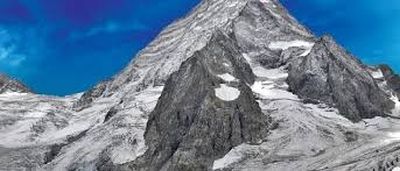
Scientists warn newly formed high-altitude lakes across upper Himalayas could trigger unpredictable glacial outburst floods in Valley Rivers
Our Special Correspondent
Srinagar: High above Kashmir Valley, beyond the last line of forests and human habitation, the mountains are quietly changing. What once appeared permanent — vast fields of snow and ice — is retreating, cracking and, in many places, turning into water. Scientists now warn that the Valley may be entering a dangerous phase as rapidly melting glaciers form unstable high-altitude lakes capable of triggering sudden glacial lake outburst floods (GLOFs).
Over the past decade, researchers using satellite imagery and ground surveys have observed a steady increase in meltwater lakes across the upper Himalayas of Jammu and Kashmir. Several of these lakes, experts say, did not exist until recent years and are growing each summer as temperatures rise and winter snowfall declines.
“Glaciers in the Kashmir Himalaya are thinning and retreating. When a glacier withdraws, it leaves behind depressions that fill with meltwater, forming morawine-dammed lakes. These dams are made of loose debris and are inherently unstable,” said noted Earth scientist Dr Shakil Ahmad Romshoo, Vice Chancellor of the Islamic University of Science and Technology. “A landslide, avalanche or even a large ice block falling into the lake can breach it suddenly.”
A glacial lake outburst flood is unlike a normal flood. It does not depend on rainfall and often occurs without warning. When the weak natural dam collapses, millions of cubic metres of water, mixed with rocks, ice and mud, rush downstream at high velocity, flattening everything in its path. Experts describe it as closer to a moving landslide than a river flood.
Officials from the Jammu and Kashmir State Disaster Management Authority say multiple upper catchments — including Sonamarg in Ganderbal, Gurez in Bandipora, the Lidder Valley of south Kashmir and the Warwan-Marwah region of Kishtwar — are under increasing observation. These basins feed major rivers such as the Sindh, Lidder and eventually the Jhelum, meaning an upstream breach could send a sudden surge toward populated areas within hours.
“The biggest concern is response time,” a senior SDMA official said. “In a GLOF there may be no rainfall and no gradual rise of water. The first sign is often a roaring sound upstream, and by then the flood wave is already moving.”
Scientists attribute the growing threat to changing weather patterns. Warmer winters have reduced snowfall, depriving glaciers of replenishment, while hotter summers accelerate melting. Even a small rise in average temperature significantly increases melt rates in high-altitude ice bodies. Researchers in Kashmir University’s environmental sciences department say the hydrology of mountain basins is shifting from slow seasonal melt to sudden water storage and release.
Local accounts appear to support the data. Shepherds, Gujjar and Bakarwal nomads, and trekking guides in higher reaches have reported new lakes, unusual cracks in glacier surfaces and streams swelling sharply during afternoon heat — classic indicators of intense glacier melt. Authorities now see these communities as a crucial early warning network.
“Technology helps, but human observation is equally important,” an official said. “People living in alpine meadows often notice changes first — new lakes forming or water colour changing — and such information can save lives downstream.”
Across the wider Himalayan arc, similar outburst floods in recent years have caused severe destruction in Ladakh, Himachal Pradesh and Uttarakhand. Experts say Kashmir shares the same geological vulnerability, with steep valleys that can rapidly channel floodwaters toward settlements, roads and hydropower installations.
“The Valley is particularly sensitive because its rivers originate directly from glacier-fed catchments,” Dr Romshoo said. “You cannot predict the exact moment of a burst, but you can identify dangerous lakes and prepare downstream communities.”
Authorities have begun satellite monitoring, vulnerability mapping and discussions on early-warning mechanisms, though scientists caution that complete prediction remains impossible. For Kashmir, the mountains have always been a source of life, feeding orchards, streams and the Jhelum for centuries. But as climate change reshapes the high Himalayas, the same glaciers that sustained the Valley may now carry a new risk — a sudden flood descending not from rain clouds, but from a collapsing wall of ice and water far above human sight.
