
Willow Fever Grips Valley: T20 World Cup Craze Sparks Rush for Kashmiri Bats
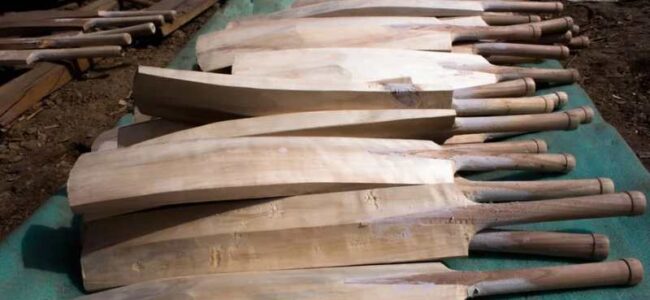
As cricket fever builds ahead of the T20 WC, Bijbehara’s famed bat industry hums with fresh orders while tourists carry home handcrafted souvenirs for their children
Our Special Correspondent
Srinagar: With the T20 World Cup excitement sweeping across television screens, playgrounds and social media timelines, a different kind of buzz is echoing from the workshops of south Kashmir’s Bijbehara — the traditional heart of Kashmir’s cricket bat industry. The rhythmic sound of chisels striking willow has grown louder, and orders for handcrafted bats have surged sharply over the past few weeks.
Bat makers say the tournament has revived demand just when winter usually slows business. Shops that remained quiet during the colder months are now stacked with freshly polished bats, their pale willow grains shining under workshop lights.
“Every time a big cricket tournament comes, especially T20, the demand suddenly rises,” said Abdul Rashid Dar, a third-generation bat craftsman from Sangam in Bijbehara. “Children watch matches late into the night and the next morning they want a bat exactly like their favourite player. Parents start calling us, and dealers from outside Kashmir place bulk orders.”
Kashmir produces a significant share of the cricket bats used across India and parts of South Asia. The wood comes from locally grown Kashmir willow trees, prized for their light weight and durability. In the narrow lanes of Bijbehara and Sangam, hundreds of small family-run workshops shape the clefts manually — from cutting and pressing to binding handles and polishing blades.
Artisans say social media clips of international players and street cricket videos are amplifying demand more than ever before.
“Earlier, business depended mainly on dealers from Punjab and Delhi. Now people directly contact us through WhatsApp and Instagram,” said Ghulam Nabi Bhat, another manufacturer. “Since the T20 matches started being discussed, we have received many advance bookings. Even schools are ordering practice bats.”
He added that smaller junior-size bats are selling fastest. “Parents are buying for kids aged 6 to 14. T20 cricket is short and exciting — children want to imitate those big shots they see.”
The surge is also visible in Srinagar’s markets, where sports shops have begun displaying rows of Kashmiri willow bats near cricket balls and gloves. Shopkeepers say the season has effectively begun a month early this year.
Interestingly, tourists visiting the Valley have become a major source of sales. Many visitors now stop at bat units in Bijbehara along the Srinagar-Jammu highway, treating the handcrafted bats as a cultural souvenir rather than just sports equipment.
Rohit Sharma, a tourist from Jaipur travelling with his family, said he had promised his son a “real Kashmiri bat.”
“My child keeps watching cricket and insisted I bring one from Kashmir. We could buy a bat anywhere in India, but here it feels special because it is handmade,” he said while selecting a junior bat. “This will be his favourite gift from our trip.”
A group of college students from Maharashtra also purchased signed bats for younger siblings.
“We came for snow but ended up buying cricket bats,” laughed Tanvi Kulkarni, a visitor. “Our brothers will not believe these are made here. It is a memory they will keep longer than photographs.”
Local craftsmen say such visitors provide direct income without middlemen, which helps small units survive rising timber and transport costs.
Winter traditionally forces many bat makers into seasonal unemployment, as willow seasoning slows and transport routes become uncertain. This year, however, tournament anticipation has kept workshops active even in February.
“Normally January and February are dull months,” explained artisan Mohammad Yousuf Mir. “But now we are working daily. Dealers want ready stock before the matches begin. For us, cricket tournaments are like festivals.”
According to industry members, Kashmir has over 400 registered and unregistered bat units employing thousands of workers — including cutters, press operators, handle makers and polishers. Many families depend entirely on this craft, which has been passed down through generations along the Jhelum belt.
Younger artisans say they now engrave player-style stickers and customised names on bats to attract children.
“Kids want their own name printed — like professionals,” said a smiling worker while applying decals. “When they hit their first six, they feel like Virat or Rohit.”
As evening falls, young boys in Srinagar’s parks and village grounds have already begun practice matches, newly purchased bats tapping on frozen turf. For Kashmir’s bat makers, every boundary hit somewhere in the world seems to echo back into their workshops.
And as the T20 World Cup approaches, the Valley’s ancient willow trees — rooted quietly along riverbanks — are once again shaping the dreams of future cricketers, one handcrafted bat at a time.
