
Dry Skies, Falling Water Tables
How Rain and Snow Deficit Is Draining Kashmir’s Groundwater
Repeated precipitation shortfalls disrupt recharge cycle, springs dry up and aquifers slip into long-term stress
Our Special Correspondent
Srinagar: Kashmir’s groundwater reserves are steadily declining as persistent deficits in rainfall and snowfall disrupt the Valley’s natural recharge system, pushing aquifers under mounting stress and raising concerns over long-term water security.
According to data from the India Meteorological Department (IMD), Kashmir has witnessed successive years of below-normal precipitation, with winters—crucial for snowfall—showing the sharpest decline.
During the winter of 2023–24, the Valley recorded a precipitation deficit of over 60 per cent, while several winter spells in 2024 and early 2025 passed with little or no snowfall, particularly in the plains and lower reaches.
Snowfall plays a critical role in Kashmir’s hydrology. Its gradual melt during spring traditionally recharges aquifers, sustains springs and supports rivers during the dry summer months. With reduced snow cover and erratic rainfall, this slow and essential recharge process has weakened significantly.
Groundwater monitoring by the Central Ground Water Board (CGWB) and field assessments by the Jal Shakti Department show a consistent fall in water tables across large parts of the Valley.
In districts such as Budgam, Pulwama, Baramulla and Kupwara, groundwater levels in shallow aquifers have dropped by 0.5 to 2 metres over the past few years. In some localised pockets, especially in karewa belts and peri-urban areas, the decline is even steeper.
Traditional springs (nagas), once reliable sources of drinking water for villages, are among the worst affected. Officials say many springs have turned seasonal or dried up altogether, forcing communities to depend on borewells, handpumps and tanker supply during summer.
“Groundwater recharge in Kashmir depends heavily on winter snowfall and sustained rainfall,” said Dr Fayaz Ahmad Bhat, hydrologist at the University of Kashmir. “When snowfall is deficient and rains are irregular, aquifers do not recover. Extraction continues for drinking and irrigation, but replenishment does not, leading to a steady and dangerous decline in groundwater levels,” he added.
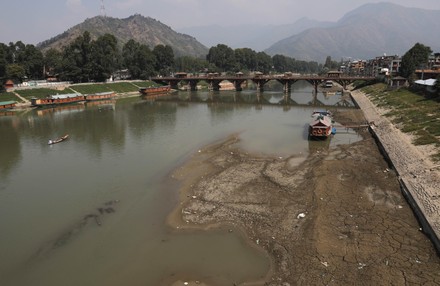
The impact is visible across sectors. Farmers and orchardists report longer dry spells and rising dependence on groundwater pumping, increasing pressure on already stressed aquifers. Reduced base flow from groundwater has also affected streams, wetlands and tributaries of the Jhelum, compounding ecological stress.
Officials acknowledge that climate variability—marked by snowless winters, delayed rainfall and rising temperatures—is emerging as a major challenge to water management in the Valley. Experts warn that without tighter regulation of groundwater extraction, protection of recharge zones and improved monitoring, the current decline could turn into a prolonged water crisis.
As Kashmir grapples with drying skies, the silent depletion beneath its soil is emerging as one of the most serious environmental challenges facing the region today.
