
When Winter Glows from Within: The Kangri’s Quiet Reign in Kashmiri Homes
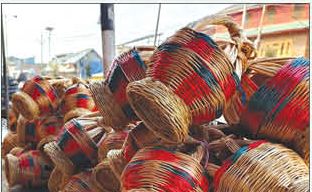
Beyond warmth, the humble firepot carries memory, identity and the living craft of generations, refusing to fade in a modernising Valley
Srinagar: From wooden cupboards and storerooms, the Kangri is brought out — modest in appearance, yet unmatched in meaning. Long before electric heaters hum to life, the soft glow of embers inside the earthen pot announces that winter has truly arrived.
In Kashmiri households, the Kangri is more than a tool against the cold. It is woven into daily life, slipped under the traditional pheran, placed near writing desks, or kept close during evening conversations. Its warmth travels directly to the body, but its comfort runs deeper, evoking memories of shared winters, family gatherings and a slower, gentler rhythm of life.
“Kangri gives a different kind of heat,” says Ghulam Mohammad Bhat, a third-generation kangri maker from Charar-e-Sharief. “Electric heaters warm the room, but kangri warms the person. That is why people never abandon it, no matter how modern their homes become.”
The making of a Kangri is itself a quiet art. The earthen pot is carefully moulded by hand, baked in kilns, and then wrapped in delicately woven willow, shaped with precision and patience. For artisans, each Kangri carries their signature, even if unseen by the buyer.
“This craft is our winter livelihood,” says Abdul Rashid Dar, a Kangri maker from Budgam. “By September, people start coming to place orders. Some want simple Kangris, some want decorated ones. There is pride in knowing that something made by our hands keeps families warm.”
Despite modern heating systems and changing lifestyles, the Kangri remains indispensable, particularly in rural areas where electricity is unreliable. Even in cities, many households insist on keeping one close, drawn by its efficiency and intimacy.
“There is emotion attached to it,” says Mohammad Yousuf Lone, an artisan from Pulwama. “When elders teach children how to sit with a kangri safely, they are passing on a tradition. It is not just a product; it is a lesson in how we live through winter.”
As the Valley endures long nights and biting winds, the Kkangri continues to glow quietly in corners of Kashmiri homes — a reminder that some traditions survive not because they resist change, but because they offer something timeless: warmth that feels personal, and a connection that refuses to fade.
