
Kashmir Willow Swings Back into Global Demand
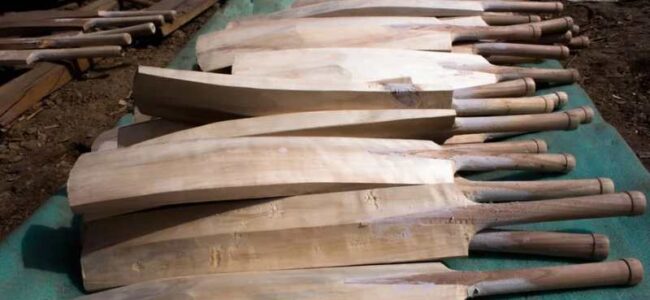
Srinagar: The steady rise of sawdust in Sangam, Charsoo and Halmulla — Kashmir’s famed willow clusters — speaks of a revival long awaited. After years of fluctuating markets and slowing sales, Kashmir’s cricket bat industry is witnessing a fresh surge in demand, with manufacturers saying that “Kashmir willow” is once again becoming a name of value across cricketing markets worldwide.
The thud of wood being shaped into bats echoes with renewed confidence inside the workshop of veteran craftsman Abdul Rashid Dar, who has spent 40 years perfecting the art. “Kashmir ka balla phir se chal pada hai,” he says, his hands dusted with fine willow flakes. “We have received orders this year from Dubai, South Africa, and even a few clubs in the UK. Our bats are going places again.”
For decades, Kashmir willow bats have been an essential part of Indian cricket — strong, affordable and ideal for beginners and club-level players. But now, bat makers say the demand has moved beyond local and national markets. “Earlier, our markets were limited to India,” says Fayaz Ahmad, a second-generation bat manufacturer from Halmulla. “This year, inquiries from abroad have been the highest in a decade. People are recognising the natural toughness of Kashmir willow.”
The revival has been fuelled by a blend of legacy craftsmanship and modern upgrades. Younger entrepreneurs have entered the trade, modernising drying kilns, using precision cutters, introducing branding and social media outreach — all helping to push the industry into a fresh inning.
“Technology has changed the way we shape the bat,” says Junaid Shah, who recently expanded his family-owned unit. “Better pressing, balanced handles, improved finishing — these make a huge difference. It helps buyers see that Kashmir willow can perform well, not just at local level but internationally.” He adds, “People abroad are surprised when they test our bats. They expect them to be basic, but they find good ping, grip and durability.”
Inside small units lining the Jhelum, senior artisans still shape clefts with instinctive precision. “Yeh kaam seekhne mein umar lagti hai,” says Rashid Dar, tapping a half-finished bat with his knuckles. “I can tell from the sound how strong the blade will be.” In another unit, Javaid Mir carefully sands a bat’s shoulders. “Hum batsman ka haath mehsoos karke balla banate hain,” he says. “We imagine who will play with it — a schoolboy, a club player, maybe someone aiming for the Ranji Trophy.”
The revival has also boosted employment across the willow clusters. Many factories, once seasonal, are now operating throughout the year. “We have more work now than we did five years ago,” says Imtiyaz, a factory worker. “Earlier we depended on pre-season orders. Now machines run all year. Even wages have improved.” Sports retailers confirm the surge. “I used to stock 150 Kashmir willow bats,” says Aslam Khan, a wholesaler in Anantnag. “Today I stock more than 300. Families prefer Kashmir willow because it’s reliable and affordable.”
Despite the momentum, challenges remain — rising wood prices, limited export support, lack of global certification and outdated drying facilities. “We are ready to compete with the world, but we need help in branding and export logistics,” says Fayaz Ahmad. “If the government supports us, Kashmir willow can be a global name like ‘English willow’.”
Still, optimism in the bat-making belt is the strongest it has been in years. As the sun sets over Sangam, Rashid Dar picks up another cleft, his eyes scanning the grains of the wood. “In every bat we make, there is hope,” he says. “Inshallah, this revival is just the beginning. Kashmir willow will shine again.”
