
Self-Help Groups Turn Kashmir’s Women into “Lakhpati Didis”
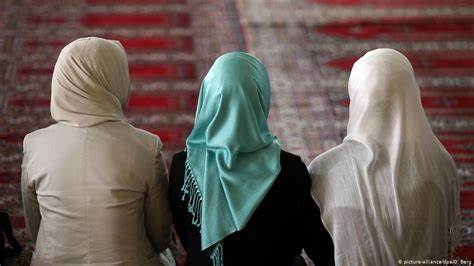
From tailoring and saffron packaging to home bakeries, SHG scheme empowers thousands of women
Srinagar: In the heart of Kashmir’s towns and villages, a quiet revolution is unfolding — led not by politicians or professionals, but by ordinary women. Thanks to the government’s Self-Help Group (SHG) scheme, thousands of women across the Valley are scripting new success stories — from stitching uniforms and packaging saffron to running home bakeries and handicraft ventures — transforming not only their lives but also their communities.
The SHG scheme, which encourages women to form groups, save collectively, and access bank-linked loans, has become one of the most successful community empowerment initiatives in Jammu and Kashmir. Today, many members proudly call themselves “Lakhpati Didis” — women who earn over Rs 1 lakh annually through their small but thriving enterprises.
Take the story of Noor, a 35-year-old from Bandipora, who once depended solely on her husband’s modest income. Two years ago, she formed a self-help group with a dozen women, pooling small savings to purchase sewing machines. “We started with school uniforms and small tailoring jobs,” Noor recalls.
“Now we take bulk orders from hospitals and shops. Each of us earns around Rs 8,000 to Rs 10,000 a month.” The group later expanded its work to produce embroidered garments for tourists. “It feels empowering to contribute to my family’s income,” Noor says with a smile. “We are planning to register our own brand soon.”
In south Kashmir’s Pahalgam area, another group of women has turned traditional saffron farming into a profitable brand. They learned modern packaging techniques under the SHG initiative and now sell their products in decorative jars under their own label. “Earlier, we sold raw saffron to traders for whatever price they offered. Now, we clean, dry, and pack it ourselves,” says Shazia, one of the group leaders. “We get nearly double the rate, and our brand has found buyers in Srinagar and even Delhi.”
Near Srinagar city, five women started baking cookies and cakes to sell in their neighbourhood. Within a year, their cooperative grew into a mini bakery supplying local cafés and schools. “We never thought our hobby would become a business,” says Farhat, who manages orders through WhatsApp. “The SHG loan helped us buy a big oven and packaging boxes. Now, we earn enough to support our families.”
The success of such ventures has created a new identity for many women — Lakhpati Didis. These are women who have crossed the Rs 1 lakh income mark through SHG-linked enterprises. One such achiever, Rubeena from Budgam district, began with a small goat-rearing project. With proper training and access to bank credit, she diversified into making cheese and organic compost. “My income crossed Rs 1.2 lakh last year,” she says proudly. “Now, villagers come to me for guidance on how to start their own SHG.”
Officials say over 80,000 women across Jammu and Kashmir are linked to SHGs under various livelihood missions. “The transformation is visible,” said an official of the J&K Rural Livelihoods Mission. “Women are becoming financially independent, confident, and respected voices in their homes and communities.”
Economists believe such small-scale success stories can contribute to broader rural development.
“When women earn, families invest more in education, nutrition, and healthcare,” said a senior economist at Kashmir University. “The SHG movement is quietly reshaping the Valley’s social fabric.”
For many women, the SHG journey is about more than money — it’s about dignity and recognition. “We no longer feel invisible,” says Noor. “We have our own income, our own identity.”
As more Lakhpati Didis emerge from the bylanes of Kashmir’s villages, their stories stand as proof that empowerment begins when opportunity and determination meet halfway.
