
JK to roll out Early Warning System for Landslides, Cloudbursts next year
Centre, UT push for radars, soil sensors and AI-driven models
Officials stress ‘zero-casualty’ preparedness
By: Our Special Correspondent
Srinagar: Jammu and Kashmir is set to witness a major technological leap in disaster preparedness with the installation of an early warning system for landslides and cloudbursts early next year.
The move comes in the wake of repeated tragedies in the hilly districts of Jammu, where extreme weather events have claimed dozens of lives, destroyed property and cut off critical highways.
Senior officials in the Union Home Ministry confirmed that the system will be a mix of cutting-edge technologies, including additional weather radars, nanotechnology-based soil sensors and artificial intelligence models to predict flash floods and slope instability. The plan also envisages a regional meteorological centre in Jammu to strengthen localised monitoring.
Union Home Minister Amit Shah, during his recent review in Jammu, said the government’s priority was to minimise loss of life by improving accuracy and outreach of disaster warnings.
“Improving our systems through critical analysis is the only way to move toward a zero-casualty approach,” he said, instructing the Indian Meteorological Department and the National Disaster Management Authority to harness big data analytics and remote sensing tools for advance alerts.
Lieutenant Governor Manoj Sinha has also emphasised that localised solutions were essential for the Himalayan terrain.
“We must explore new possibilities to develop soil sensors specifically for the Himalayan regions, which will serve as part of an advanced early warning system for landslides and flash floods,” he said, urging universities and research institutions to collaborate with government agencies.
Union Minister Jitendra Singh also revealed that four additional Doppler weather radars will be installed across the Union Territory to fill critical gaps in coverage. “The region’s unique topography makes localised weather monitoring essential. These new radars, along with a regional IMD centre, will greatly enhance real-time detection of extreme rainfall events,” he said.
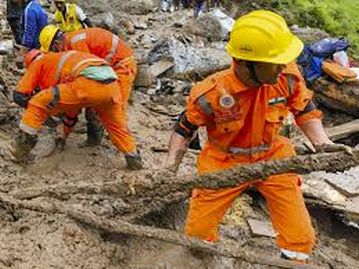
The urgency of the project was underscored by recent tragedies. In August, a cloudburst in Kishtwar’s Chositi village left over 60 people dead and dozens missing as flash floods swept through homes and pilgrims on the Machail Mata route. In Ramban and Reasi, sudden cloudbursts triggered landslides that buried houses and blocked the Jammu–Srinagar highway for days, stranding thousands of travellers and disrupting essential supplies. In Doda, massive rockslides caused further destruction.
Experts caution that forecasting cloudbursts with precision remains extremely challenging. “We are developing models that can identify vulnerable zones based on atmospheric instability and topography, but turning that into actionable local alerts requires dense ground sensor networks and robust communication systems,” said a senior IMD scientist.
An NDMA spokesperson added, “Our goal is not just prediction, but to ensure alerts reach communities in time and that evacuation protocols are in place.”
Pilot projects are likely to begin in high-risk districts like Kishtwar, Ramban and Reasi. The system will rely on soil moisture and ground movement sensors, radar and satellite data, and community-level dissemination tools such as SMS alerts, radio broadcasts and sirens in remote villages.
For Jammu and Kashmir, where climate change has intensified rainfall patterns and fragile mountains are increasingly prone to landslides, the upcoming early warning system marks a critical step towards resilience. Authorities hope that by the next monsoon season, vulnerable communities will no longer be caught unaware by nature’s fury.
