
A City Running Out of Space: Srinagar Plans to Grow Beyond Itself
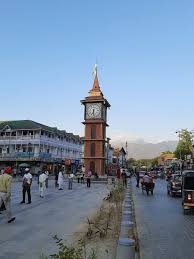
Master Plan-2035 proposes Satellite Township at Bemina, new housing colonies across Kashmir to ease Downtown congestion and overcrowded homes
Our Special Correspondent
Srinagar: On most evenings in Srinagar’s Downtown, the congestion is not just on the roads — it is inside homes.
In neighbourhoods like Nowhatta, Khanyar and Rainawari, families no longer live in houses but in vertical compromises. A single ancestral home now shelters brothers, their children and sometimes grandchildren. Rooms have been split, attics converted into bedrooms and rooftops sealed into living spaces. Privacy has become a luxury, ventilation a problem and sunlight an occasional visitor.
This quiet urban crisis reached the Jammu & Kashmir Assembly when MLA Salman Sagar raised a question asking whether unplanned urbanisation and inadequate housing infrastructure had pushed large parts of Srinagar into severe congestion and whether the government intended to create a “Greater Srinagar” to decongest the city.
The government did not provide statistical congestion data. But its reply revealed something more significant — a long-term restructuring of how Srinagar will expand.
Authorities pointed to the Srinagar Master Plan-2035, describing it as the roadmap for sustainable growth of the metropolitan region. The idea is clear: Srinagar cannot be relieved by widening its lanes anymore; it must grow outward.
At the centre of this shift is a proposed 150-hectare Satellite Township along the National Highway Bypass at Bemina (Rakh Gund Aksha). Planned by the Srinagar Development Authority, the township is envisioned as a self-sufficient urban pocket — residential plots, apartment blocks, offices, commercial centres and recreational spaces — effectively creating a new residential destination outside the crowded core.
Urban planners believe the move targets the city’s most pressing reality: a housing shortage that forces multiple families to live under one roof, affecting dignity, health and quality of life.
The expansion, however, will not stop at Bemina.
The J&K Housing Board has outlined a ring of new residential colonies in adjoining districts — a gradual creation of what officials informally describe as a “Greater Srinagar”:
Housing colony at Chatterhama, Srinagar, with transaction advisory services already assigned.
Flatted accommodation at Bakoora, Ganderbal, approved under a self-financing scheme in December 2025. Integrated Mass Housing Colony at Watapora, Bandipora.
Mass housing flats at Padgampora, Pulwama, proposed under Public-Private Partnership mode.
Each project is planned with basic civic amenities — roads, water supply, sanitation and open spaces — facilities that the historic core increasingly struggles to accommodate.
For decades, Srinagar expanded organically along the Jhelum, absorbing villages and stretching neighbourhoods without parallel infrastructure. As population increased, houses rose vertically instead of the city expanding horizontally. The result is a capital where traffic jams begin in alleys, emergency access is difficult and basic services are stretched thin.
The government’s strategy now signals a shift from densification to decentralisation — moving residents, services and commercial activity into planned clusters around the city.
The plan does not aim to empty Downtown. Rather, it seeks to reduce the pressure on it — so the heritage core remains livable instead of collapsing under its own weight.
Srinagar’s crisis has never been sudden. It has grown quietly over decades — one extra floor, one subdivided room, one parked vehicle at a time.
Now, for the first time, the city is preparing to solve congestion not by changing the old Srinagar, but by building a new one around it.
