
Kashmir on High Seismic Alert as Scientists Warn of Major Earthquake Risk
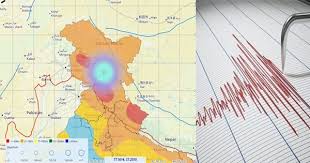
Himalayan fault lines place J&K among India’s most vulnerable regions as experts stress urgent need for preparedness
Our Special Correspondent
Srinagar: Jammu and Kashmir remains one of the most earthquake-prone regions in the country, with scientists warning that the Valley’s location in the seismically active Himalayan belt makes it highly vulnerable to a major earthquake in the future.
According to updated seismic zoning and scientific assessments, large parts of Jammu and Kashmir fall in the highest-risk earthquake category. The region lies along the collision boundary of the Indian and Eurasian tectonic plates, where stress continues to accumulate due to ongoing plate movement at a rate of nearly 5 centimetres per year.
Earth scientists say this tectonic setting has historically produced devastating earthquakes. The 2005 Muzaffarabad earthquake of magnitude 7.6, which struck close to the Kashmir region, claimed over 80,000 lives and caused extensive damage on both sides of the Line of Control. Earlier records also point to major seismic events in 1885 and 1555 that severely affected Kashmir.
Renowned geoscientist and Vice-Chancellor of the Islamic University of Science and Technology (IUST), Prof Shakil Romshoo, said Kashmir’s seismic vulnerability is well documented and should be treated as a serious governance challenge.
“Kashmir is situated in one of the most tectonically active zones of the Himalayas. A major earthquake here is inevitable; the uncertainty lies only in its timing. What matters most is our level of preparedness,” Prof Romshoo said.
He warned that rapid and unplanned urbanisation, particularly in Srinagar and other growing towns, has significantly increased the potential impact of a strong earthquake. “Widespread violation of building norms, construction on floodplains and unstable slopes, and lack of retrofitting of old structures have compounded the risk,” he added.
Official data indicates that a large proportion of residential and commercial buildings in Kashmir are non-engineered structures, making them highly susceptible to collapse during high-intensity shaking. Experts have repeatedly stressed the need for strict enforcement of earthquake-resistant building codes, seismic micro-zonation, and strengthening of critical infrastructure such as hospitals, schools and bridges.
Disaster management specialists also underline the importance of public awareness, emergency drills and capacity-building of local institutions to ensure swift response in the event of a major seismic event.
With urban expansion accelerating across Jammu and Kashmir, scientists caution that earthquake risk reduction must move beyond post-disaster relief and be integrated into development planning. “Preparedness today will determine the scale of loss tomorrow,” Prof Romshoo noted.
4.7-magnitude earthquake hits Kashmir
Srinagar: An earthquake of magnitude 4.7 hit the Kashmir Valley early on Monday, causing panic among the people in Pattan and surrounding areas of Baramulla district, officials said.
There were no reports of any damage so far, they said.
According to the National Centre for Seismology, the quake occurred at 5.35 am at a depth of 10 km with the epicentre in Pattan area, which is 10 km northeast of Gulmarg, a tourist resort.
Earlier, the magnitude was the earthquake was said to be 4.6 but it was later reviewed to 4.7. Tremors lasted nearly 20 seconds.
The Kashmir Valley is located in an highly active seismic area.
The National Seismic Hazard Map by the Bureau of Indian Standards released in November last year has placed the entire Himalayan arc, including Kashmir, in the siesmic Zone VI.
Large parts of Kashmir on either side of Line of Control were flattened by a 7.6 magnitude earthquake on October 8, 2005, resulting in death of thousands and widespread damage to infrastructure.
