
Silent Sentinels of Snow: How Kashmir’s Snow Leopards Endure Harsh Winters
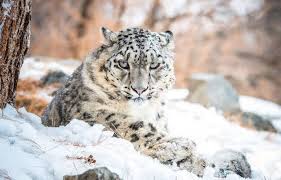
Amid heavy snowfall and sub-zero temperatures, the elusive big cat adapts, breeds, and survives in Kashmir’s high Himalayas
Our Special Correspondent
Srinagar: As heavy snowfall seals off mountain passes and blankets Kashmir’s upper reaches in silence, a rare predator continues to move with quiet confidence across the frozen landscape.
The snow leopard, often called the “ghost of the mountains,” remains active through Kashmir’s harsh winters, demonstrating extraordinary adaptation to one of the world’s most extreme habitats.
In Kashmir, snow leopards inhabit high-altitude zones ranging from about 3,000 to over 5,000 metres above sea level. Wildlife officials and conservation researchers say the species is found in parts of north Kashmir such as Keran, Machil and Gurez, and in the higher mountain tracts of Kishtwar.
Camera traps, pugmark surveys and scat analysis indicate that the big cat does not abandon these areas during winter but modifies its movement patterns to cope with deep snow and scarce prey.
According to official estimates, Jammu and Kashmir, excluding Ladakh, supports a small but ecologically important population of snow leopards, believed to number in the low dozens.
Across the Indian Himalayan region, recent assessments put the snow leopard population at around 700, with Ladakh accounting for the largest share. Though Kashmir’s numbers are modest, experts stress that the species plays a crucial role in maintaining balance in fragile mountain ecosystems.
Winter brings significant changes to the snow leopard’s behaviour. As prey species such as Himalayan ibex, markhor and musk deer move to lower elevations in search of forage, snow leopards follow, sometimes venturing closer to forest fringes and human settlements.
This seasonal shift increases the likelihood of livestock depredation, and wildlife officials note that years with prolonged or heavy snowfall often see a rise in conflict-related reports. Compensation schemes and awareness programmes, however, have helped reduce retaliatory killings.
Despite the harsh conditions, winter is also a vital phase in the snow leopard’s life cycle. The species typically mates between January and March, turning Kashmir’s snow-covered mountains into critical breeding grounds. Cubs are born in late spring or early summer, when prey becomes more abundant. Conservationists say this makes the protection of undisturbed winter habitats essential for the species’ long-term survival.
Physically, the snow leopard is perfectly equipped for Kashmir’s severe winters. Its thick, smoke-grey fur provides both insulation and camouflage, wide fur-covered paws act as natural snowshoes, and a long, heavy tail aids balance on icy slopes while also serving as protection against biting cold.
However, experts warn that climate change poses an emerging threat. Unpredictable snowfall, changing vegetation patterns and shrinking alpine habitats could disrupt prey availability and force snow leopards into increasingly fragmented ranges. Expanding roads, tourism and human activity in high-altitude areas further add to the pressure.
In response, the Jammu and Kashmir Wildlife Protection Department has strengthened monitoring through camera trapping and field surveys, while engaging local communities as partners in conservation. Officials say coexistence-based approaches are slowly building trust in snow leopard landscapes.
As snow continues to fall over Kashmir’s mountains, the presence of the snow leopard remains a powerful reminder of the resilience of nature. Silent and unseen, it endures the winter, guarding the ecological balance of the high Himalayas long after human footprints disappear under fresh snow.
