
Kashmir loses its green cover rapidly in a decade
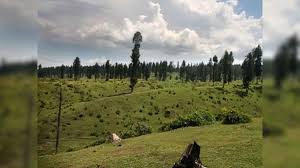
Development pressure, forest fires & climate stress is thinning the Valley’s natural cover
Our Special Correspondent
Srinagar: Kashmir, long known for its dense forests and rich biodiversity, is slowly losing the green cover that once defined its landscape. Over the last decade, large stretches of forest and tree cover across the Valley have come under growing pressure, raising serious concerns about the region’s environmental future.
Official data from the Forest Survey of India shows that while Jammu and Kashmir recorded a marginal increase in overall forest area over the past ten years, recent assessments point to a decline in several parts of Kashmir. Between 2021 and 2023, the Union Territory lost around 40 square kilometres of forest cover, much of it from areas facing rapid urbanisation and infrastructure expansion.
Forest officials say roads, housing projects, tourism-related construction and encroachments near forest fringes have fragmented natural forests into smaller patches. This has weakened the forests’ ability to regulate climate, recharge water sources and support wildlife.
A senior forest department official said the concern is not only the loss of area but the degradation of dense forests into open or degraded patches, a change that often escapes attention but has serious ecological consequences.
Climate change has further worsened the situation. Rising temperatures and prolonged dry spells have increased the frequency of forest fires, damaging thousands of hectares of woodland in recent years. Officials admit that fire incidents are becoming harder to control due to changing weather patterns.
Independent assessments suggest that Kashmir has lost more than 200 square kilometres of tree cover since the early 2000s. Environmental experts warn that shrinking green cover is already affecting natural springs, increasing soil erosion and pushing wildlife closer to human settlements.
Residents living near forest areas say streams are drying earlier than before and summers are becoming harsher, clear signs of a changing environment.
Another forest official said the department is strengthening fire management systems, expanding plantation drives and using technology to monitor forests. However, he stressed that protecting Kashmir’s forests will require strict enforcement of laws, responsible development and active public participation.
Experts warn that unless the decline is checked, the loss of green cover could increase the risk of floods, landslides and water shortages, turning a slow environmental decline into a major crisis for the Valley.
