
‘When Snow Came Like a Prayer’: Kashmir’s Winter Skies Find Breath Again
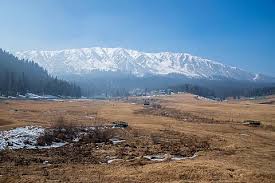
After record-breaking pollution during Chila-e-Kalan, season’s first snowfall and rain wash Kashmir’s air clean
Srinagar: The season’s first snowfall across Kashmir’s upper reaches and famed tourist resorts, accompanied by steady rainfall in the plains, has delivered an almost spiritual relief to the Valley—cleaner air after weeks of choking haze.
As Gulmarg, Sonamarg and Pahalgam disappeared under fresh snow and rain swept through Srinagar and south Kashmir, air quality levels dropped sharply, restoring clarity to skies long dulled by pollution.
The change followed one of the darkest phases in Kashmir’s environmental memory. With the onset of Chila-e-Kalan, the Valley recorded AQI levels between 160 and 180 across major urban pockets, placing air quality in the unhealthy bracket.
The situation was most alarming in the Khonmoh Industrial Estate, where AQI touched 213 on December 19, among the highest levels ever recorded in Kashmir’s weather history.
For residents, the pollution was not just a statistic but a daily struggle.
“In my seventy years, I have never felt winter air this heavy,” said Ghulam Mohammad Dar, an elderly resident of downtown Srinagar. “We used to say Kashmir’s cold keeps us healthy. This time, the cold brought smoke and sickness. When the snow fell, it felt like Allah answered our prayers.”
Environmental experts say the improvement was driven by natural atmospheric cleansing.
“Snowfall and rainfall are effective in removing suspended pollutants such as PM2.5 and PM10,” explained Dr. Nisar Ahmad, an environmental scientist. “During Chila-e-Kalan, temperature inversion traps emissions close to the surface. Precipitation disrupts this cycle, leading to a sudden and visible improvement in air quality.”
Official monitoring data shows that following the precipitation, AQI levels across much of the Valley fell into the moderate to satisfactory range within two days. Visibility improved, the sharp smell of smoke eased, and distant mountain ridges reappeared after weeks of obscurity.
However, experts warn the relief may be short-lived. With Chila-e-Kalan still at its peak, prolonged dry spells, increased biomass burning and vehicular emissions could once again push pollution levels upward.
For now, Kashmir’s winter has offered a rare gift—a reminder that while nature can cleanse the air in silence, protecting it will require sustained.
