
‘A Winter Without Snow’
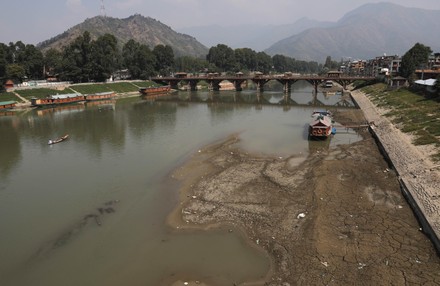
December 2025 Marks Kashmir’s Driest in Years
Rainfall deficit leaves rivers low, mountains bare and deepens climate worries across the Valley
Our Special Correspondent
Srinagar: December, once defined by heavy snowfall and frozen mornings, is passing quietly in Kashmir this year. First two weeks of December 2025 have emerged as one of the driest Decembers in recent memory, leaving mountains bare, rivers depleted and farmers deeply worried about the months ahead.
Weather data shows that the Valley recorded a severe rainfall and snowfall deficit during the month, with many areas receiving little or no precipitation. At several places, the shortfall crossed 80 per cent compared to normal levels. Meteorologists say weak western disturbances failed to bring sustained winter weather.
“December is a critical month for snowfall,” said a senior meteorological official. “Snow accumulated during this period acts as a natural reservoir that feeds rivers, springs and groundwater during spring and summer. A dry December creates long-term stress.”
Across the Valley, landscapes that should have been wrapped in white remained exposed well into late December. Higher reaches, which usually receive early snowfall, also saw limited accumulation. Environmental experts warn that reduced snow cover disrupts the natural water cycle.
“The snow is the backbone of Kashmir’s ecology,” said environmental scientist Dr Irfan Ahmad. “When snowfall declines, it affects everything — rivers, wetlands, hydropower and even local climate patterns.”
The impact is already visible. The Jhelum and its tributaries are flowing at unusually low levels, while springs and wetlands in several districts show signs of stress. Experts fear that continued dry winters could worsen water shortages during summer.
For farmers and orchardists, the dry spell has brought growing anxiety. Snow plays a vital role in protecting crops and orchards, insulating roots from extreme cold and helping control pests.
“Snow is like a protective blanket for apple trees,” said Ghulam Hassan Dar, an apple grower from Shopian. “Without proper snowfall, pests survive and the roots are exposed. We fear this will affect flowering and yield next year.”
Similar concerns are echoed across the Valley. Abdul Rashid Bhat, a farmer from Pulwama, said winters no longer follow familiar patterns. “Earlier, we could predict winter. Now December goes dry, then suddenly it rains or snows late. This uncertainty makes farming very difficult,” he said.
In north Kashmir’s Sopore, orchardist Mohammad Yousuf Lone said the changing winters are hurting livelihoods. “We depend on snowfall for soil moisture and healthy orchards. Every dry winter pushes us deeper into risk,” he said.
Climate experts say December 2025 fits into a broader trend of warming and drying winters in Kashmir. “Winters are becoming shorter and erratic,” said a climate researcher based in Srinagar. “Reduced snowfall and longer dry spells are clear signals of climate change in the region.”
Meteorologists caution that even if January or February brings snow, it may not fully compensate for the loss of early winter precipitation. As the year ends, the unusually quiet winter skies have left many uneasy.
In a region where snow has shaped life, culture and livelihoods for generations, December 2025 stands out as a stark reminder that climate change is no longer a distant threat — it is already reshaping Kashmir’s seasons.
