
Snowless Winter Puts Kashmir’s Glaciers in Danger
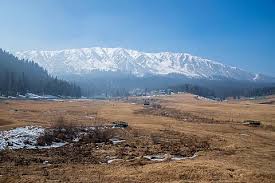
Sharp snowfall deficit is exposing glaciers to heat, accelerating their melt & threatening Kashmir’s long-term water security.
Our Special Correspondent
Srinagar: Kashmir is facing one of its driest early winters in recent memory, and the impact is already visible on its glaciers. The higher reaches that normally receive early snow in November and December remain bare, and experts say this absence of snow is causing direct harm to the Valley’s fragile glacier systems.
Weather data shows that Jammu and Kashmir has recorded a 45–60 percent deficit in snowfall and precipitation this season. In many high-altitude areas, the early winter snowpack is almost missing, leaving glacier surfaces uncovered and vulnerable.
Snow plays three key roles: it protects the glacier from sunlight, keeps temperatures stable, and adds new layers of ice. When snowfall is delayed, glaciers are left without this natural shield.
A Srinagar-based glaciologist, Dr. Riyaz Ahmad, notes, “A glacier without snow behaves like a body without clothing. It absorbs more heat and begins to melt much earlier, even during winter.”
Long-term studies show worrying numbers. Several glacier basins in Kashmir have lost 5–6 percent of their total area over the last two decades. Some glaciers are retreating by 10–20 metres each year. Experts believe that a snowless or low-snow winter will only accelerate this decline.
MeT Director Mukhtar Ahmad explains, “Winter snow is the only way glaciers recover what they lose in summer. If snow does not arrive on time, the glacier starts the next season weaker and thinner.”
Early signs of stress are already appearing across the region. Water levels in glacier-fed streams are lower than usual for December. Rural springs in districts like Kupwara, Anantnag and Budgam are showing reduced discharge. The extended dry spell is also affecting soil moisture in orchards and fields.
Farmers are worried that a weak winter will hit apple production and paddy fields next year. Hydropower projects may also face irregular water flow during summer, as they depend heavily on steady glacier melt.
Environmental experts warn that the absence of snow also raises risks of sudden disasters. Without snow, glacier ice melts faster, filling glacial lakes more quickly. This can make them unstable.
An environmental researcher from Kashmir University says, “Bare glaciers warm quickly. This increases the chances of glacial lake bursts and slope failures, especially in steep valleys like Gurez, Pahalgam and Sonamarg.”
As Kashmir waits for its first major snowfall, the stakes continue to rise. The longer the mountains stay snowless, the more damage the glaciers suffer. And the future of water, farming and daily life in the Valley depends heavily on these shrinking reserves of ice.
