
Kashmir’s Groundwater Takes a Hit as Rivers and Streams Run Dry
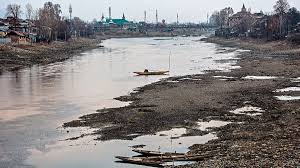
Long dry spell, weak snowfall and warmer day temperatures deepen Valley’s water concerns
Our Special Correspondent
Srinagar: Kashmir is seeing a sharp fall in its groundwater levels as rivers, streams and springs continue to shrink under a prolonged dry spell. Officials say this winter’s decline is one of the steepest recorded in recent years.
According to the Ground Water Division of the Jal Shakti Department, monitoring wells across Pulwama, Anantnag, Budgam and Kupwara show a drop of 0.5 to 3 metres compared to last winter. Some areas are seeing even deeper falls.
The impact is clear across the Valley. The Jhelum is flowing at one of its lowest winter levels in more than a decade. Tributaries such as Doodh Ganga, Vaishaw, Pohru and Rambi Ara have thinned sharply, and many village springs have slowed or stopped for the first time in years.
Hydrologist Dr Nazir Ahmad Dar said the decline is directly linked to the lack of winter snowfall.
“Snow is the main source of groundwater recharge here,” he said. “When snowfall reduces and temperatures stay high, the soil dries out and aquifers do not refill.”
Independent water expert Ajaz Rasool said Kashmir’s rivers depend heavily on slow snowmelt.
“When there is no snow, rivers drop early, springs shrink and groundwater goes down quickly,” he said.
The Indian Meteorological Department says many districts have recorded a 70–80% deficit in rain and snow this winter. Minimum temperatures have stayed 1–3°C above normal, preventing moisture from holding in the ground.
Farmers warn that the situation is already affecting agriculture.
“Our spring has almost dried,” said Bashir Ahmad, an orchardist from Shopian. “If there is no snowfall soon, our orchards will suffer badly.”
Experts say that if the dry spell continues, Kashmir may face more serious water shortages in the coming months. With no strong western disturbance in sight, officials fear the Valley’s water crisis may deepen unless rain or snow arrives soon.
