
Cold Wave: Winter smog chokes Kashmir, Air in Sgr turns toxic
PM levels soar in late November as doctors, scientists warn of worsening health crisis
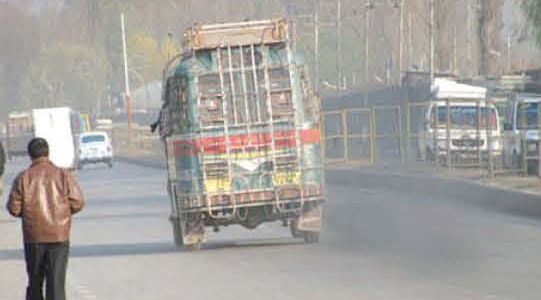
Srinagar: As Kashmir steps into peak winter, a thick blanket of smog has settled over Srinagar, turning the air toxic and raising concern among health experts. The past few weeks have recorded a sharp rise in particulate pollution, fuelled by coal and wood heating, heavy traffic and stagnant winter air that refuses to disperse trapped pollutants.
Residents say the haze is visible throughout the day. Evenings bring a smoky stench, while mornings begin under a dull, grey sky instead of the usual crisp winter air. Scientists monitoring the situation warn that the current pollution trend is more severe than previous seasons.
A senior scientist with the Jammu and Kashmir Pollution Control Board, said the Valley is currently under a temperature inversion that locks pollution close to the ground. “Cold air gets trapped under a layer of warm air, forming a lid over the Valley. Whatever smoke or emissions we generate stays near the ground. People are breathing it for hours every day,” she said.
Monitoring data shows that PM2.5 levels rose sharply in late November, mirroring severe winter spikes recorded in earlier years when numbers climbed above safe limits several times over. Experts say the trend this season is similar, driven mainly by household heating and traffic load.
Earth science expert Dr Shakil Ahmad Romshoo described the situation bluntly. “On some winter days, Srinagar’s air quality is no different from the most polluted metropolitan cities. At times it is worse. If the pattern continues unchecked, the long-term risk will be grave,” he said.
Health professionals are already witnessing the effects. Hospitals are reporting more asthma flare-ups, chronic cough cases and breathing distress with the onset of cold. Pulmonologist Dr Mohammad Shafi said the combination of low temperature and toxic air is dangerous. “Cold winds trigger winter illnesses, but when the air itself is smoky and particulate-rich, the risk multiplies. Children and elderly people suffer first,” he warned.
People across Srinagar say this winter feels heavier to breathe. Junaid Ahmad, a shopkeeper from Nowhatta, said mornings have become difficult. “I step outside to open my shop and the air feels thick. My throat burns some days. It never used to be like this,” he said.
In Rajbagh, mother of two, Rifat Jan, described keeping her children indoors. “They start coughing as soon as they go out to play. We can’t keep them indoors all winter, but the air doesn’t feel safe anymore,” she said.
Experts say domestic coal bukharis, wood stoves and diesel generators remain the biggest winter polluters, while thousands of vehicles add to the load. Without cleaner heating options, better public transport and strict control of emissions, they fear winter smog will only deepen each year.
Dr Romshoo said long-term action cannot wait. “Unless we change how we heat our homes and how we move across the city, we may be preparing for winters that become a health emergency,” he said.
As the season deepens, many in Srinagar wear masks not just for flu — but for air that stings their lungs. The fear now is not only of frost, but of the smoke that settles with it.
