
Saffron fields loose charm as farmers shift to high-density apples, Lavender and other crops
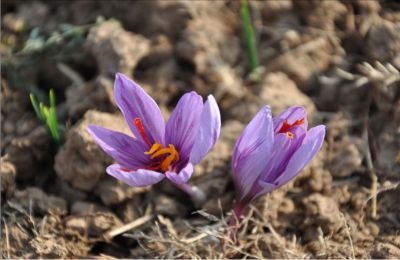
Declining yields, climate stress push Kashmir’s traditional saffron growers toward new livelihoods
Srinagar: For generations, the purple bloom of saffron fields in Pampore signified more than a harvest — it was heritage, pride, and the backbone of thousands of families.
Today, that landscape is slowly transforming. Once-thriving saffron growers, custodians of a trade as old as Kashmir’s history, are quietly turning away from the valley’s most iconic crop as yields plunge and economic uncertainty deepens.
Across once-famed Karewas, farmers who inherited saffron fields spanning decades — even centuries — are replacing the delicate red-gold spice with high-density apple orchards, lavender farms, and other climate-resilient alternatives. For many, it is not a choice but a survival strategy.
Saffron production has witnessed a drastic fall in the last decade. Farmers say blooming cycles have become unpredictable, rainfall patterns have shifted dramatically, and prolonged dry spells have weakened the soil’s moisture retention capacity. Even the much-celebrated National Saffron Mission, though helpful in patches, could not fully reverse the trend.
“Saffron is no longer giving us enough to feed our families,” says Abdul Majid, a third-generation grower from Pampore. “There were years when our fields looked like carpets of purple. Now, some patches don’t flower at all.”
Poor irrigation, erratic weather, shrinking pollinator activity, and rising input costs have collectively pushed farmers into financial distress. Many admit they held on purely out of emotional connection — until survival forced a switch.
The valley’s horticultural landscape is witnessing a quiet revolution. High-density apple plantation — once limited to progressive orchards — is now spreading rapidly across old saffron belts. These apple varieties promise early yield, high returns, less climatic risk, and steady demand.
“We earn in two years what saffron couldn’t give in five,” says Faisal Ahmad, who uprooted half of his saffron corms to plant imported apple saplings. “The market is stable, and buyers line up themselves.”
Alongside apples, lavender has emerged as another profitable alternative. Its drought resistance, low maintenance, and booming demand for essential oils have made it particularly appealing in areas suffering moisture loss. Rows of purple lavender now grow where saffron once dominated — a symbolic yet bittersweet reminder of change.
“Lavender gives us assured profit even with little water,” says Hameeda, a widow who converted her inherited saffron land. “I miss saffron, but I cannot ignore my children’s future.”
The decline of saffron farming is not just an economic shift — it is an emotional rupture. For saffron growers, the trade was an identity, a legacy woven into Kashmir’s cultural fabric. Local experts warn that if current trends continue, the famed Kashmiri saffron may become a boutique rarity rather than a thriving industry.
Yet as climate stress intensifies and profits shrink, more farmers are making difficult choices. The purple bloom that once defined Pampore is fading, replaced by new crops and new hopes — but also by a lingering sense of loss for a tradition that shaped generations.
