
Unearthing the Past : Ancient Settlement Discovered in Khonmoh Sheds Light on Kashmir’s Lost Civilisation
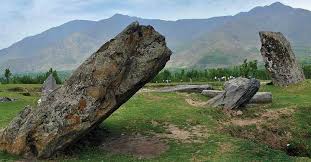
Archaeologists uncover remnants of pottery, dwellings & tools believed to date back over 2,000 years; experts call it a window into Kashmir’s ancient trade, cultural links
Our Special Correspondent
Srinagar: In a remarkable archaeological breakthrough, a team of researchers has unearthed what is believed to be an ancient settlement at Khonmoh, on the outskirts of Srinagar — a discovery that could redefine our understanding of Kashmir’s early history and its role as a cultural crossroads of the ancient world.
The excavation, led by the Department of Archives, Archaeology and Museums, J&K, in collaboration with local universities, has revealed fragments of terracotta pottery, stone tools, charred grains, and structural remains suggesting organised human habitation that could date back more than two millennia.
According to preliminary assessments, the site bears striking similarities to other early historic settlements found along ancient trade routes that once connected Kashmir with Central Asia and the Indian plains.
“This discovery is extraordinary — the artefacts and layout indicate a thriving community engaged in trade, craftsmanship, and agriculture,” said Dr Shabir Ahmad Rather, the lead archaeologist heading the excavation. “The patterns of pottery and tool design show cultural exchanges that go beyond the Valley, pointing to Kashmir’s ancient cosmopolitan character.”
Local residents first stumbled upon the site while digging for construction work earlier this year. When unusual artefacts were noticed, authorities were alerted, leading to a scientific survey that confirmed the area’s archaeological significance.
Researchers have also unearthed stone foundations, possibly belonging to early dwellings, along with furnace-like pits that suggest pottery or metalworking activity. Charcoal samples are now being sent for carbon dating to determine the precise timeline of the settlement.
“This could be one of the most important archaeological discoveries in recent times,” said Dr Meenakshi Kaul, a historian. “If dating confirms the early historic period, Khonmoh might have been a vital link between Kashmir’s ancient capital areas and trade centres along the Jhelum River.”
As news of the discovery spread, curious locals and students flocked to the site to witness the excavation in progress. Authorities have now cordoned off the area to preserve its integrity, with plans to set up a mini-site museum once documentation and preservation work are complete.
For the people of Khonmoh, the find has brought pride and wonder. “We never imagined our land held such ancient secrets,” said Ghulam Nabi Dar, a local resident. “It feels like our village has become part of history.”
Experts say the Khonmoh site could complement existing archaeological records from Burzahom, Semthan, and Pampore, offering new insights into Kashmir’s early settlements, technology, and patterns of human life.
As dusk falls over the excavation mounds, the rhythmic brushing of soil by archaeologists continues — a delicate dialogue between the present and a civilisation long buried, now slowly revealing its story beneath the timeless earth of Khonmoh.
