
No Bumper Saffron Crop in Kashmir This Year, Only 15% Bloom Reported
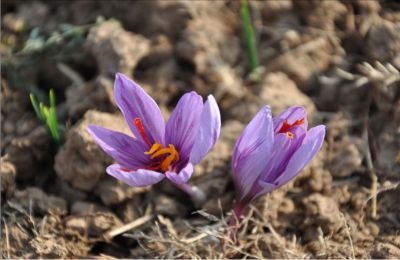
Farmers blame heat waves & changing weather patterns for poor yield, hope for revival next season
Pampore: The world-famous saffron fields of Pampore have failed to paint the expected purple carpet this autumn, as farmers report a drastic fall in bloom — barely 15 percent compared to normal years.
President of the Saffron Growers Association Kashmir, Abdul Majeed Wani, said that back-to-back heat waves and erratic weather have severely affected the flowering cycle. “Due to the intense heat last year and this summer, the saffron corms didn’t respond well. We received timely rainfall, but the seed didn’t bloom the way it should have. The bloom this year stands at around 15 percent. Hopefully, next year will bring better results,” Wani said.
In the sprawling Karewas of Pampore, where the air is usually heavy with saffron fragrance in October, the mood is subdued.
“We were expecting a good harvest this time because of the rains, but the plants are not flowering,” said Ghulam Nabi, a grower from Lethpora. “We worked hard to prepare the land, spent on fertilizers and irrigation, but nature had other plans.”
Another farmer, Zahida Bano from Konibal, shared her disappointment: “Last year, heat damaged the bulbs, and this year, despite rainfall, the flowers are few and weak. The government must help us with scientific guidance and compensation.”
Abdul Ahad, a seasoned grower from Chandhara, echoed the concern. “We have been cultivating saffron for generations, but never have we seen such erratic patterns. Some patches have no flowers at all. It feels as if the land is losing its fertility due to changing climate.”
Shabir Ahmad, a young farmer experimenting with modern irrigation, said, “Even with sprinkler systems, we couldn’t achieve much this year. The bulbs seem to have gone dormant. Experts should guide us on soil rejuvenation — otherwise saffron farming will become unviable.”
“We had pinned our hopes on this season to recover from last year’s losses,” said farmer duo, Mohammad and Yousuf from Dusoo. “But the yield is negligible. The flowers that did bloom are smaller, and the stigma is less vibrant. It’s heartbreaking for families that depend entirely on this crop.”
Experts say that rising temperatures, soil fatigue, and irregular precipitation are taking a toll on Kashmir’s saffron economy, which was once a thriving symbol of the Valley’s agrarian heritage.
Agriculture officials in Pulwama district said they are assessing the losses and monitoring the crop health. “We are aware of the reduced bloom and will take measures to support growers through the National Saffron Mission,” an official said.
For now, Pampore’s golden crop — once the pride of Kashmir’s economy and culture — is staring at yet another lean season.
“Nature has tested us again,” said Wani. “But saffron farmers never lose hope. With better weather next year, we might see a bumper bloom again.”
