
Sawalkote Hydropower Project: A New Dawn for Ramban
By: Navaid Ahmed
For generations, the people of Ramban district have watched the mighty Chenab River flow through their rugged mountains — powerful, unending, and full of promise. It has been a river of hope and hardship alike, carving its way through rock and time, carrying with it a dream that refused to fade — the Sawalkote Hydroelectric Project.
After four long decades of waiting, that dream is finally being realized. The Government of India has cleared the ₹31,380-crore Sawalkote Hydropower Project, a monumental decision that marks the revival of one of India’s largest and most ambitious hydropower ventures. For the people of Ramban, this isn’t just an engineering project — it is the rebirth of a promise, a ray of hope, and a turning point in their history.
The Dream That Survived Four Decades
The Sawalkote project was first conceived in the 1980s when the idea of harnessing the Chenab’s energy was just beginning to take shape. Engineers surveyed, planners dreamed, and the local population waited — believing that someday the project would bring jobs, electricity, and development to their hills.
But the years that followed were marked by silence and setbacks — endless bureaucratic delays, environmental debates, and political instability. For nearly forty years, the Sawalkote project remained trapped between paperwork and promises.
That changed in October 2025, when India’s Expert Appraisal Committee (EAC) under the Ministry of Environment, Forest, and Climate Change (MoEFCC) finally recommended environmental clearance for the project. This decision came shortly after India suspended the Indus Waters Treaty (IWT) — a historic 1960 agreement that limited India’s use of the western rivers (Indus, Jhelum, and Chenab).
With this bold policy shift, the government opened a new chapter in national hydropower development, paving the way for Sawalkote’s long-awaited revival.
Engineering the Power of the Chenab
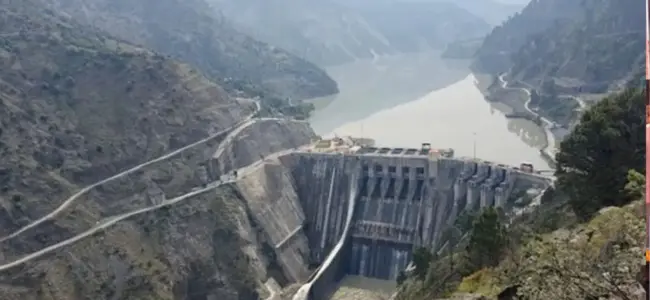
The 1,856 MW Sawalkote Hydroelectric Project, to be built by NHPC Limited, will be the largest hydropower station in Jammu & Kashmir. Designed as a run-of-the-river project with limited storage, it features a 192.5-metre-high roller-compacted concrete dam — among the tallest in the country.
When completed, it will generate around 7,534 million units of electricity annually, meeting peak power demand across northern India and contributing significantly to the nation’s renewable energy capacity.
The project spans Ramban, Reasi, and Udhampur districts, covering around 1,401 hectares of land, including 847 hectares of forest area. While the sheer scale of construction is immense, NHPC’s plan ensures a careful balance between infrastructure and ecology.
A Commitment to Green Development
Unlike older hydropower models, Sawalkote’s design reflects India’s modern environmental ethics. The project’s updated Environmental Management Plan (EMP) allocates ₹594 crore — a substantial increase from earlier provisions — for ecological protection and restoration.
This includes: • Catchment Area Treatment (CAT) to prevent soil erosion and siltation in the Chenab basin.
- Biodiversity conservation efforts to safeguard both aquatic and terrestrial habitats.
- Muck disposal and stabilization plans to manage debris responsibly.
- Continuous monitoring of air, water, and soil quality to prevent long-term environmental degradation.
Moreover, the Kishtwar High Altitude National Park, the nearest protected area, lies around 63 km away, ensuring minimal impact on core wildlife zones. The EAC has emphasized that every construction phase must adhere strictly to eco-friendly standards — a sign that India’s energy future can coexist with nature’s harmony.
The Heartbeat of the Project — The People of Ramban
Beyond turbines and transmission lines, the real story of Sawalkote lies in its people — the villagers who have waited for decades, the youth who sought work elsewhere, and the families who continued to hope that their homeland would one day be transformed.
Around 13 villages and nearly 1,500 families will be directly affected by the project. Yet, this time, there is a sense of optimism. NHPC has committed to a comprehensive Resettlement and Rehabilitation (R&R) Plan, ensuring that no one is left behind.
Key provisions include:
- New homes with essential amenities for displaced families.
- Livelihood training and employment opportunities for local youth.
- Education and healthcare facilities in newly developed townships.
- Fair and transparent compensation for land and assets lost.
During construction, the project will provide around 1,500 local jobs, and once operational, around 200 technical and maintenance posts will remain permanent — a lifeline for many who previously migrated in search of employment.
For Ramban, this is more than economic growth; it is a social rebirth — a chance for its people to live with dignity and opportunity in their own homeland.
Development Ripple — Infrastructure, Roads, and Schools
Mega projects like Sawalkote often bring unseen benefits beyond electricity. The construction phase will drive massive improvements in infrastructure and connectivity across the Chenab Valley.
New access roads, bridges, and tunnels will link remote villages to main highways. Better transportation will attract small businesses, hospitality ventures, and service industries. Schools and health centers planned under the project will improve quality of life, especially in interior hilly areas where public facilities remain limited.
For Ramban — often associated with highway closures and landslides — the Sawalkote project brings not only light but stability and progress.
Strategic Importance — India’s Hydropower Revival
The significance of Sawalkote extends far beyond Ramban’s boundaries. It symbolizes India’s strategic assertion over its river resources, especially following the Indus Waters Treaty suspension.
Under the 1960 Treaty, India was allocated full rights over the eastern rivers (Ravi, Beas, Sutlej) but limited use over the western ones (Indus, Jhelum, Chenab). For years, diplomatic caution and technical delays prevented India from maximizing these rights.
Now, projects like Sawalkote represent a new national strategy — to fully harness India’s entitlement for non-consumptive use, including hydropower generation.
In this context, the revival of Sawalkote is both a developmental necessity and a strategic move, reinforcing India’s energy security, water management capacity, and regional influence.
Together with other Chenab basin projects — Pakal Dul (1,000 MW), Kiru (624 MW), and Ratle (850 MW) — Sawalkote completes India’s vision of transforming Jammu and Kashmir into a renewable energy hub for northern India.
Voices from the Valley
In 2016, when public hearings were conducted, the response was emotional yet divided. While many welcomed the idea of development, others worried about losing land, forests, and traditional livelihoods.
Today, as environmental and social clearances align, the mood has changed. Many villagers now see Sawalkote as the long-awaited promise of equality — an assurance that Ramban too can stand shoulder to shoulder with developed districts.
A young graduate from the project area puts it simply:
“We’ve seen engineers and officials come and go, but this time it feels real. Maybe now our generation will finally see the Chenab bring us not just water, but power and pride.”
Such words echo across villages along the river, reflecting a blend of patience, pain, and renewed hope.
Beyond Power — A Symbol of Faith and Resilience
Ramban has endured much over the years — road blockades, natural disasters, landslides, and migration. Yet, its people have never given up hope. The Sawalkote project, in many ways, is their reward for decades of endurance.
It stands as a monument of resilience, showing that even in regions forgotten by time and policy, faith can move mountains — or in this case, harness rivers.
When completed, the project will not just illuminate homes; it will illuminate identities, redefining Ramban’s image from a remote mountain district to a center of power and progress.
An Emotional Ending — Hope Flows Again
As the Chenab carves its path through deep gorges and lush valleys, it carries with it the story of Sawalkote — a story of delays, determination, and dreams.
For the government, this project is a milestone in energy security. For engineers, it is a technical triumph. But for the people of Ramban, it is far more — it is homecoming, hope, and history reborn.
The Sawalkote Hydropower Project reminds us that development is not just about electricity or economics — it is about empowering people, protecting nature, and healing forgotten lands.
When the turbines of Sawalkote begin to spin and the first currents of power surge through the grids, the light that reaches Indian homes will carry something special — the spirit of Ramban, the strength of Chenab, and the dream of a people who never stopped believing.
Forgotten Valleys, Rising Hopes — The Voice of Pogal Paristan and Neel
Amid the cheers and celebrations across Ramban, there lies a quieter hope — in the valleys of Pogal Paristan and Neel, where people have lived for decades feeling unseen and unheard. When the NH-44 four-lane project brought progress to other regions, these valleys remained in the shadows, their roads broken, their youth migrating, their dreams buried under dust and distance. Yet, the people never complained — they kept faith that one day the government would remember them too.
Today, with the revival of the Sawalkote Hydropower Project, that faith flickers back to life. For the people of Pogal and Neel, this project is more than just electricity — it is recognition after years of silence, justice after years of neglect. They hope that when the Chenab roars again with power, it will carry light not just to the cities but also to their forgotten hamlets. The elders pray that before their eyes close, they will see their mountains shine, and their children work proudly on their own land.
Let the light of Sawalkote reach Pogal Paristan and Neel — where the hearts have waited longest, and hope still flows deeper than the river itself.
(The author is an Electrical engineer hailing from Marnal Maligam Pogal (Ramban)
