
Kashmir gets colder: 30% Rise in Chill Over Two Decades Rings Climate Alarm
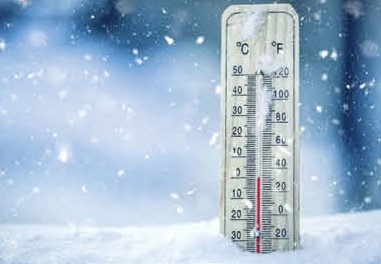
Erratic winters, early snowfall, rising cold intensity point to deep climate shifts in the western Himalayas
By: Our Special Correspondent
Srinagar: The Valley is getting colder — and not just seasonally. Climate data over the past two decades reveals that the intensity and duration of cold in Kashmir have increased by nearly 30 percent, underscoring a growing climatic imbalance in the Himalayan region.
A SKAUST Scientist said the change is part of a wider disruption in weather systems linked to global warming, shifting atmospheric currents and rapid glacial decline.
The early snowfall witnessed this October in Gulmarg, Gurez and Kupwara — nearly a month before its usual onset — is only the latest indicator of these shifts. Srinagar recorded one of its coldest October nights in years, with temperatures dipping close to freezing. Weather experts attribute this not to random variability but to an emerging trend of erratic winters and uneven warming across the Himalayas.
Researchers at the University of Kashmir and the Indian Institute of Tropical Meteorology (IITM) have documented a complex pattern: while average annual temperatures have risen by about 1.2°C since 2000, the frequency of extreme cold events has also grown.
The reason, experts say, lies in disrupted jet streams and intensified western disturbances — atmospheric systems that now bring sudden snow and cold spells to the region. “Global warming is not linear; it amplifies climatic extremes,” explains Nazir Ahmad, a climate scientist at the University of Kashmir. “Kashmir’s winters are becoming more unpredictable — shorter in duration but sharper in intensity. That is what the data clearly shows.”
This volatility is taking a toll on the Valley’s ecosystems. Early snow disrupts vegetation cycles and alters soil temperature regimes, while premature freezing affects the flowering of key crops.
Forest officials report unusual patterns in leaf shedding and reduced dormancy among several tree species, suggesting biological stress due to temperature irregularities. Wildlife experts have also noticed altered migration and hibernation patterns, as shorter autumns compress the food cycles of both animals and birds.
Farmers, meanwhile, are among the most affected. Apple growers in Shopian and Kulgam say the October snow damaged large portions of their crop still hanging on trees. The frost has also been linked to fungal infections and quality deterioration. Agricultural economists estimate that the cumulative loss in apple output this season may exceed 10 percent.
“It’s no longer a one-year anomaly,” says an agriculture expert. “We are observing a structural climatic shift. Both early frost and untimely rains have become recurring phenomena.”
The hydrological consequences are equally worrying. Glaciologists at the National Centre for Polar and Ocean Research (NCPOR) report that glaciers in the Pir Panjal and Zanskar ranges are retreating by nearly 20–25 metres annually.
However, with snowfall arriving early and melting faster, its contribution to groundwater and river systems is declining. This has implications for the Jhelum basin, where spring water recharge is becoming increasingly erratic.
Tourism, often seen as a beneficiary of early snow, gains only temporarily. A few weeks of extra visitors cannot offset the larger economic disruptions in agriculture, horticulture, and power generation caused by climatic uncertainty. Even urban life is being reshaped — heating demand has surged, air pollution from biomass burning has risen, and health authorities have reported higher cases of respiratory and skin ailments during prolonged cold spells.
Climate experts stress that Kashmir’s changing weather profile demands a scientific and policy-oriented response. The focus, they argue, must shift from emergency relief to climate adaptation — integrating agriculture, water management, and energy under a single regional strategy. Enhanced forecasting systems, crop diversification, and stronger disaster preparedness are critical to building resilience.
As the Valley adjusts to yet another early winter, the warning signs are clear. The increase in cold intensity, altered snowfall cycles, and shifting ecological patterns together paint a picture of a fragile Himalayan ecosystem under stress. Kashmir’s cold is deepening — not as a return to its legendary winters of the past, but as a symptom of a changing climate that is rewriting the rhythm of its seasons.
